The short answer
- The Saros 10R is a very thin, very strong robot vacuum and mop: 20,000 Pa of suction, a body under 8 cm tall and a dock that does almost everything.
- Reviewers praise its obstacle avoidance, hair handling and edge mopping, and fault its threshold climbing, thick spills and tanks one reviewer found small.
- It launched at $1,599.99, so it suits a home with low furniture, pets and mixed floors where hands-off cleaning is worth a lot.
You have around $1,600 to spend on a robot vacuum and a corner sofa that most machines cannot get under. That is the situation the Saros 10R was designed for, and it is also the price at which every weakness starts to matter.
What it is, and what changed
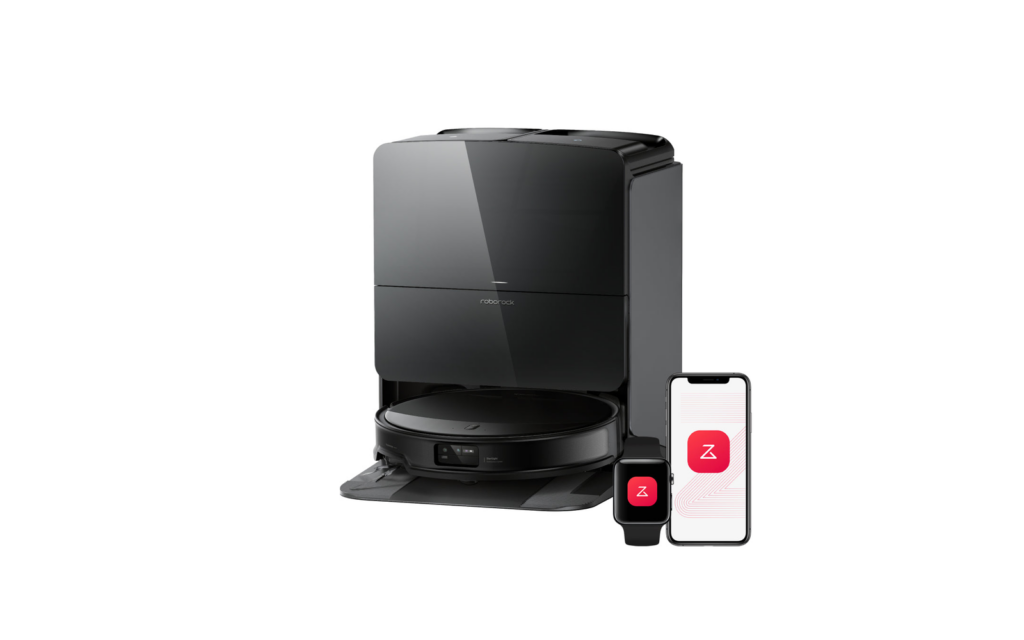
The Saros 10R belongs to the Saros line that Roborock introduced at CES 2025. Its defining change is the navigation system: instead of a spinning LiDAR dome on top, it uses what the maker calls StarSight, a solid-state LiDAR with two transmitters paired with time-of-flight sensors, which lets the body stay low. The result is a robot that stands 3.14 inches tall and, in The Ambient’s words, is one of the shortest the reviewer has seen at 7.98 cm.
Do not confuse it with the Saros 10, which launched around the same time at a similar price. The 10 keeps a LiDAR that retracts into the body and uses a different mopping setup, and a higher suction rating of 22,000 Pa against the 10R’s 20,000 Pa.
Spec check. Source: Roborock and its reviewers, checked July 2026
| Model | Claimed figure | What the number does not tell you |
|---|---|---|
| Suction | 20,000 Pa | A rating, not a result: the hair, sand and carpet tests below say more. |
| Height | 7.98 cm tall | Low enough for many sofas and sideboards, with no dome on top. |
| Battery | 6,400 mAh | The quoted runtime is 180 minutes on the lowest setting; higher settings shorten it. |
| Threshold climbing | Up to 4 cm | One test cleared 20 mm and 26 mm boards but not a single step of about 36 mm. |
| Obstacle recognition | 108 object types | A perfect score in one test, but blips on small cat toys, a charger and string lights in another. |
| Dust bin | 270 ml | Smaller than average, so frequent emptying runs matter in a shedding household. |
| Warranty | One year, limited | An extended plan is sold separately. |
Cleaning: hair, sand, carpet and corners
The clearest strength is hair. The 10R uses a split main brush designed to channel hair to the middle, and Vacuum Wars, the testing lab behind most of the numbers here, saw it resist 100% of the hair in its 7-inch hair test. On flattened 2.5-inch pet hair in carpet it collected 92%, against an 80% average for that test, and in a sand-in-carpet test it recovered 80% of the debris against a 75% average.
Mashable’s reviewer, testing daily in a home with two cats, measured roughly 90 percent pickup on medium-pile rugs, but found that pickup dwindled on lower-pile rugs. Where it stood out was corner cleaning, a problem area for most robots, helped by a mop pad that swings out on a hinge to reach edges and right angles.
Deep rugs were not a problem for The Ambient’s reviewer, whose robot crossed a deep-pile rug without getting stuck and kept vacuuming.
Thresholds: the claim and the tests
Where sources disagree
Roborock
The chassis can cross thresholds up to 4 cm.
Vacuum Wars
It cleared 20 mm and 26 mm boards, but not a single step of around 36 mm.
Our read
The tested single step of about 36 mm was too much, and another reviewer had to mark the threshold in the app before the robot would climb a board. For steps up to a couple of centimeters it should cope; beyond that, plan to test it.
Carpet and floor settings
Mixed floors are where the settings matter. The robot can lift its mop pads over carpet, or leave them behind at the dock and fetch them for the mopping run, a first on any Roborock. The lab counts three different ways to protect carpets in a mixed-floor home.
The reviewer who tried the deep-pile rug also lists the carpet options. The default is Dynamic Lift, which raises the mop pads, and the robot can instead ignore carpets or cross them only when necessary. Other settings add a suction boost on carpet, vacuum carpets after a room is done, or vacuum them before the mop pad gets wet. There are four main vacuum modes, from Quiet to Max, and a Max+ step in vacuum-only mode.
Mopping
The mopping system uses two spinning pads, one of which extends at edges. The pads are magnetic, so the dock can take them off when the robot vacuums carpets, and the dock washes them with 80°C water and dries them with 55°C air.
Results were good but not perfect. The lab scored 103 points on dried stains, better than average, and slightly below average on a streaking measure. The reviewer with two cats also had no complaints about thin spills such as wine and soy sauce, but found syrup a struggle. Sticky messes probably need a second pass.
Navigation and obstacle avoidance
The lab gave it a perfect 24 out of 24 in its obstacle avoidance test and its Best Obstacle Avoidance award for mid-2025. In daily use, the robot dived under a tricky corner sofa without getting stuck, and the reviewer with two cats found there was not really any getting stuck, even around cat bowls and a tight bathroom. That reviewer still saw stumbles on small cat toys, a charger and dangling string lights.
The trade-off for the low body is efficiency. With no LiDAR on top, the lab saw a slight loss in efficiency, although it scored average on navigation efficiency, which it calls a passable grade. Mapping was fast: setting the robot up took longer than its first mapping run.
The dock and the upkeep
The 10-in-1 dock empties the bin, washes and dries the pads and refills the water tank. The reviewer who tried the deep-pile rug says the dock takes 2-liter dust bags that ought to last close to two months, and holds two 3-liter water tanks, one clean and one dirty.
Mashable’s reviewer mops a large kitchen almost every day and found the tanks smaller than other docks, so the clean-water refill light comes on once every few days. That is more often than on most robots the reviewer has tried, but not outlandish. If you mop daily, expect to refill often; if you mop once or twice a week, the small tanks matter much less.
Living with it
The reviewer with two cats suspects the water runs out so often partly because the robot mops slowly and uses more water than necessary. That reviewer says slow mopping is rarely a problem unless you are in a hurry. A self-washing dock matters most if you will really use the mop: on robots without one, the reviewer stopped using mop mode at all, because washing a soggy pad every day was a chore. Brush upkeep, by contrast, is light: after about two weeks of daily cleaning, next to no hair was wrapped around the brushes. For the small dust bin, the lab suggests programming more frequent returns to the dock during a run. A second dock option plumbs into the water supply, which automates filling and draining the tanks.
Noise, battery and app
Cleaning volume depends on the suction level and reaches 68 decibels at maximum, while the dock’s emptying whoosh is about 73 decibels, similar to a washing machine. Battery performance was a positive in the lab: efficiency and estimated square footage per charge were above average, though Roborock’s official runtime is a little shorter than on some earlier flagships.
The app is one of the best in the industry, according to the lab. It has quirks, though: there is no no-mop zone, and vacuum-first-then-mop has to be set through a schedule.
Price and warranty
The launch price was $1,599.99. A reviewer pointed out that Roborock’s 2024 flagship debuted at the same price with only 8,000 Pa of suction. The main rival on the same list was the $1,699.99 Dreame X50 Ultra, known for climbing over obstacles. The warranty is one year, with an optional extended plan. Check the current price before buying, since flagship prices move.
Who should buy what
A home with low furniture and a corner sofa
A strong match: the 7.98 cm body and no dome are its main selling point, and testers saw it go under sofas without sticking.
A house with pets that shed
Good on hair: a perfect score on long hair, above-average pet hair pickup, and a small bin that needs frequent emptying runs.
A household with high thresholds between rooms
Test before you buy: the 4 cm claim was not met in one lab test, and an app setting is needed.
Someone who mops sticky messes often
It handles thin spills well, but thick sauces and syrup needed more passes, and one reviewer found the dock tanks small.