

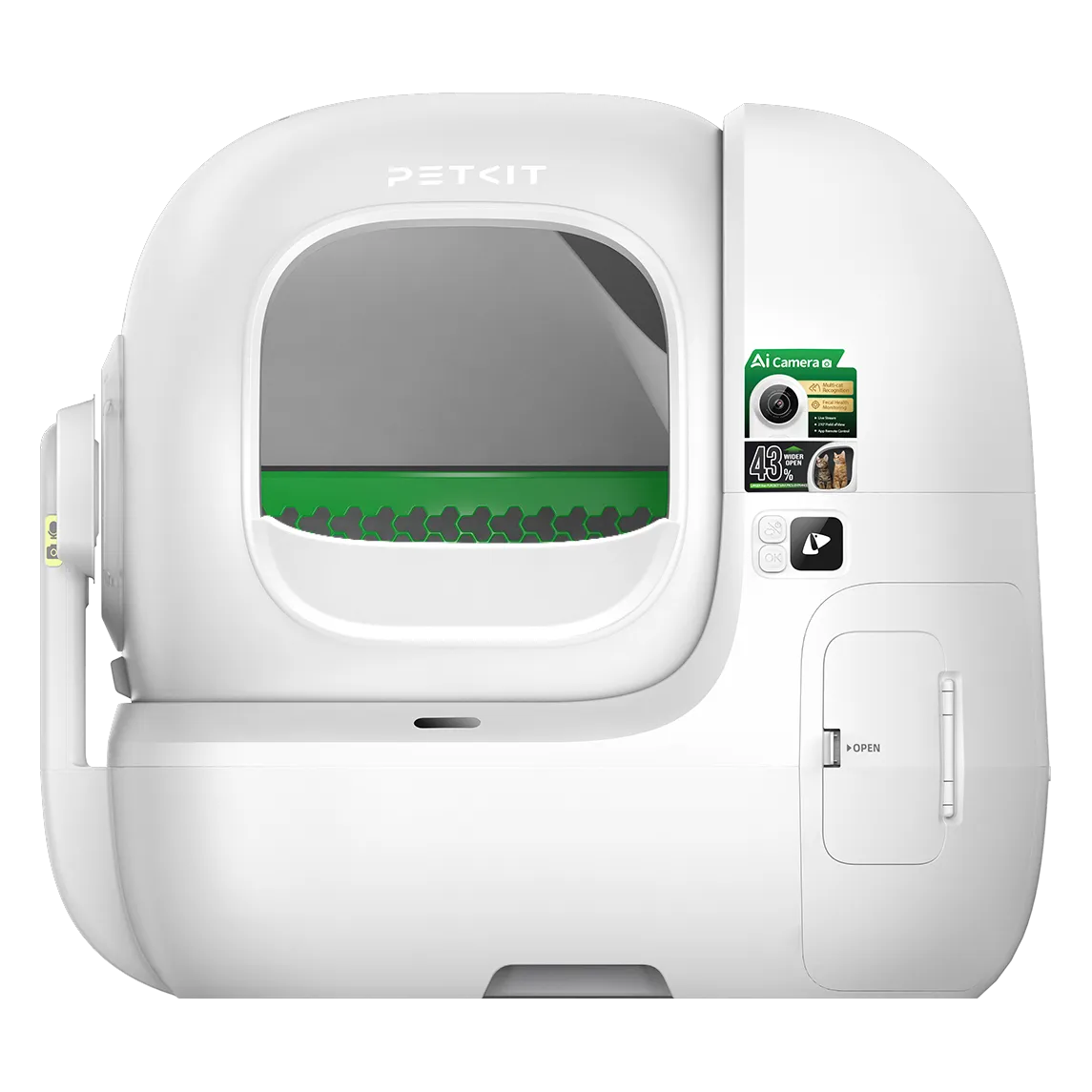
An automatic litter box is one of the bigger purchases a cat owner can make, and the answer to whether it pays off depends more on your household than on the machine. This guide sets out what these boxes really take off your hands, the homes where they shine, the cats that refuse them, and the costs that keep coming after the box arrives.
Key insights
- PETKIT Purobot Max Pro 2: Larger entry designed for comfort
- PETKIT Purobot Ultra: Auto-seals each trash bag and refills a new one
What a self-cleaning box actually does
After your cat leaves, the box waits, then separates clumps from clean litter and moves the waste into a closed compartment. On drum designs such as PETKIT’s Purobot range, the drum turns to sift the litter, and the clean litter stays put for the next visit.
Some models go further. PETKIT says the Purobot Ultra seals each full trash bag on its own and fits a new one. Most boxes still leave you to empty the compartment, top up litter and give the unit a deeper clean now and then. The win is frequency: a task you did daily becomes one you do every week or two.
Homes where it is worth the money
The case is strongest in a few kinds of household:
- Several cats sharing one box. Waste piles up fast, and many cats avoid a dirty box. Cleaning after each visit keeps it usable for the next cat.
- Long or unpredictable hours. If you cannot scoop at the same time each day, the box does it for you.
- Owners who find scooping hard. Bending and lifting every day is a real burden for some people, and a weekly bag change is easier.
- Small homes. Prompt cleaning and a closed waste compartment keep odor down in an apartment where the box is never far away.
Cats and homes that should skip one
Kittens are the clearest case. Self-cleaning boxes are generally designed for grown cats, so wait until yours reaches the size the maker recommends. Very nervous cats are the second. A cat that hides from the vacuum cleaner might never step into a box that moves, however slowly.
The setup has limits too. Drum boxes need clumping litter, a power outlet and a floor space larger than a standard tray. If any of those is a problem, a good open tray and a daily scoop will serve you better for far less money.
Where to start
| Role | Model | Price | Why | Buy |
|---|---|---|---|---|
| Best smart litter box for most cats | PETKIT Purobot Max Pro 2 | $499.99 | Our pick for most homes: a larger entry, an AI camera with weight sensors and recognition for each cat. | Check price |
| Best premium litter box | PETKIT Purobot Ultra | $799.99 | The premium option that seals its own waste bags and loads a fresh one. | Check price |
| PETKIT Purobot Crystal Duo | $199.99 | An open-top camera box for cats that refuse a hooded drum. | Check price |
Cameras and health tracking: helpful or a gimmick
Higher-end boxes add cameras and sensors. The Purobot Max Pro 2 pairs an AI camera with precision weight sensors and recognizes each cat by face, and PETKIT says this tracks litter box usage and urinary health. The Purobot Ultra also recognizes each pet and, by PETKIT’s account, uses AI to follow changes in litter box behavior.
Changes in litter box habits are often an early sign that a cat needs a vet, and cats are good at hiding illness. A record of visits makes it easier to answer a vet’s questions. The limits are just as real: a camera does not replace an exam, and alerts are prompts to look closer. If your cats are young and healthy, monitoring is a nice extra rather than a reason to buy.
Open-top or enclosed drum
Enclosed drums hold litter and smell inside and stop kicked litter reaching the floor. Some cats, though, dislike stepping into a hooded space, which is why the size of the entry matters. PETKIT gave the Max Pro 2 a larger entry for that kind of comfort.
Open-top designs take a different route. The Purobot Crystal Duo keeps the top open and uses a disposable tray of crystal litter, which PETKIT says stays clean for up to 30 days with no scooping or washing. The trade is that an open design leaves more room for litter to scatter, so a mat around it helps.
The costs that keep coming
Budget for more than the box. Drum models keep you buying clumping litter and waste bags, and a crystal design like the Crystal Duo runs on replacement trays. A heavy-use household gets through supplies faster, and the box draws power around the clock.
Look for a brand that sells these supplies directly, because a box waiting on a part does nothing for your cat. Factor in a little patience as well. Most cats need a gradual changeover, with the old tray kept nearby until the new box is accepted.
FAQ
How do I get my cat to use an automatic litter box?
Set it up beside the old box with the litter your cat already uses, and leave the cleaning cycle switched off for the first few days. Once your cat uses it willingly, turn on automatic cleaning. Remove the old box only after several days of steady use.
Do automatic litter boxes smell less?
Usually, because waste is moved into a closed compartment soon after each visit instead of sitting in the tray for hours. A box that seals its own bags, like the Purobot Ultra, closes off the waste further. An overfull compartment will still smell, so empty it on time.
Are they safe for cats?
Reputable designs wait until the cat has left and stop if one returns. Read the safety section of any box you consider, set up any guard or fence the maker supplies, and keep watch during the first week while your cat learns the routine.
How often do I still need to clean it?
Expect to empty the waste compartment every week or two, depending on how many cats use it, and to top up litter as it runs low. Every few weeks, empty the drum fully and wash it, following the brand’s instructions for which parts can get wet.