

Most dog beds that get ignored were bought in the wrong size, in a shape that does not match how the dog sleeps, or with a fill that sank within months. Those three choices matter more than color or brand. This guide works through each one, then covers and cleaning, and the cases where the usual advice changes.
Key insights
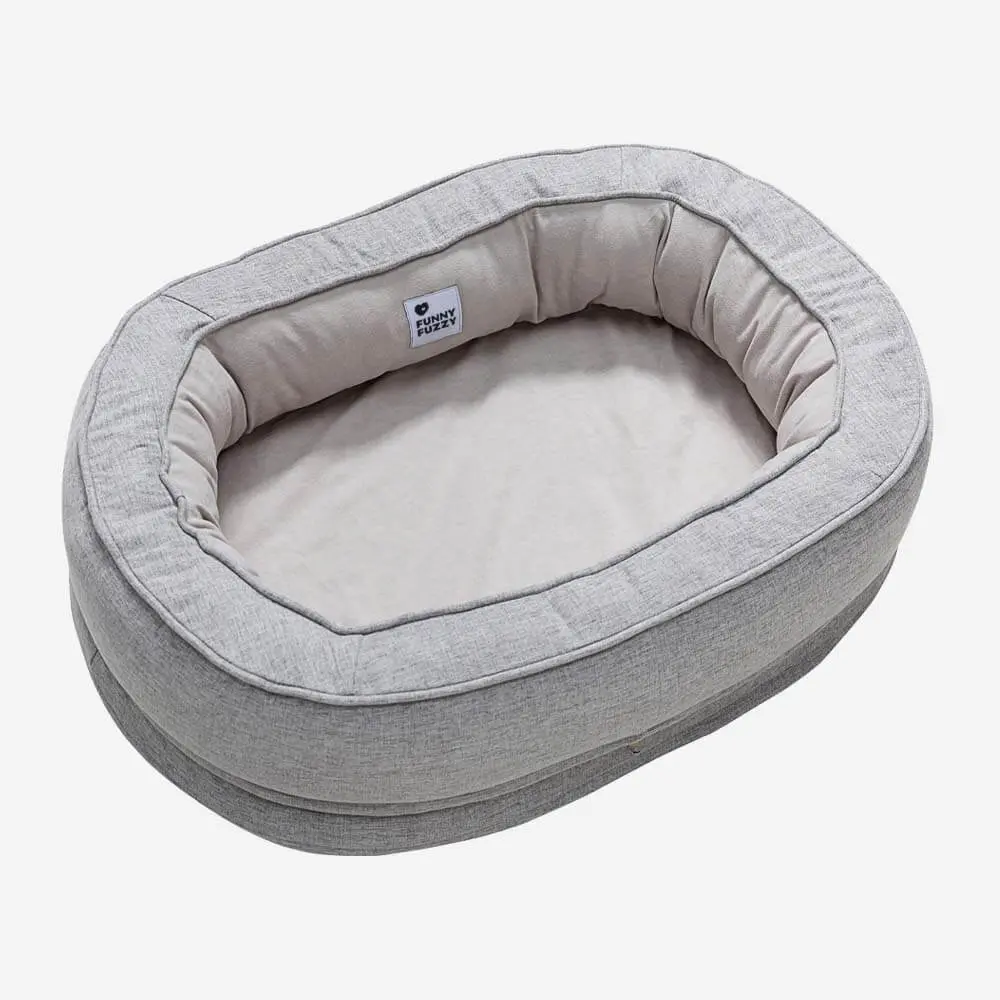
- FunnyFuzzy Donut Orthopedic Bed: High bounce foam cushion base
- FunnyFuzzy Full Surround Orthopedic Bed: Orthopedic foam that FunnyFuzzy says relieves joints
- FunnyFuzzy Cloudy Napper: Two-side cushions and backrests to rest a head on
Measure first, then round up
Lay a tape along your dog while it sleeps on its side, from the tip of the nose to the base of the tail. That is the minimum length for a flat bed. For a dog that always curls up, a round bed somewhat shorter than that number works, because a curled dog covers far less floor than a stretched one.
Between two sizes, take the larger. Size letters vary from brand to brand, and the FunnyFuzzy beds we cover list sizes such as M and L without measurements in their listings, so the brand's own chart is the reference to trust.
Choose a shape for the way your dog sleeps
- Donut and round beds wrap a rim around the dog. They suit curlers and dogs that like to feel enclosed.
- Full surround bolster beds support the body on every side. Seniors that brace against an edge to lie down benefit most.
- Sofa beds with headrests copy the shape of a couch, with backrests and side cushions for dogs that sleep with their head propped up.
- Flat padded beds leave the surface open, which suits side sleepers and fits neatly in crates.
- Car seat beds turn part of a back seat into a defined, tethered spot for dogs that ride along often.
If your dog changes position through the night, a bed with a low edge on one or two sides is a good compromise between a rim and open space.
Fill: foam, padding and the orthopedic label
Padding and fiber fill feel soft and inviting, and they suit light, young dogs well. Their weakness is compression: under a heavy dog, the area where it lies every night packs down until the floor shows through. Foam resists that, and a foam base gives a dog something firm to push off from when standing, which matters more as a dog ages.
Orthopedic is a word brands choose, not a regulated standard. When a listing uses it, look for what is inside. FunnyFuzzy, for example, names orthopedic foam and joint relief for its Full Surround bed, while its Donut uses a high bounce foam base. If a listing gives no detail about the fill, treat the label with caution.
Where to start
| Role | Model | Price | Why | Buy |
|---|---|---|---|---|
| Best for most dogs | FunnyFuzzy Donut Orthopedic Bed | $63.99 | A round foam bed with a waterproof inner cover, our pick for most dogs. | Check price |
| Best for older dogs | FunnyFuzzy Full Surround Orthopedic Bed | $129.50 | Orthopedic foam and support on every side, aimed at senior dogs. | Check price |
| Best sofa bed with headrests | FunnyFuzzy Cloudy Napper | $120.50 | A sofa bed with backrests and two-side cushions for dogs that prop their heads up. | Check price |
Covers, liners and the washing machine
A bed you cannot clean will not last long, however good the fill. Check for these before buying:
- A cover that comes off fully and fits in a home washer.
- A hidden zipper, so the pull does not become a chew toy.
- A waterproof or water-repellent layer that keeps moisture out of the core.
- A non-slip base if the bed sits on wood or tile.
- A surface fabric that suits your dog: tight weaves and suede-like finishes resist claws better than long pile.
Read the wording carefully. Water-repellent fabric sheds splashes and drool, while a true waterproof liner is what stops a full accident from reaching the foam.
Seniors, puppies, diggers and travelers
Senior dogs need firm foam and an edge to lean on, in a bed with an entry low enough to step over without effort.
Puppies need a liner more than anything, plus a bed sized for the adult dog rather than the puppy in front of you.
Diggers do better on a scratch-resistant surface than on plush pile, which their claws pull apart.
Dogs that ride along are calmer in a tethered car seat bed than loose on the seat, though a padded bed is not a substitute for a crash-tested restraint on long drives.
FAQ
How thick should a dog bed be?
Thick enough that your dog's hips and elbows do not touch the floor when it lies down, which means heavier dogs need more depth than small ones. Press a hand into the middle of the bed: if you feel the floor easily, a large dog will too. Foam holds its depth longer than padding.
Should I buy one bed or several?
Many dogs use more than one. A main bed in the living area, a smaller one in the bedroom and a car seat bed for trips cover most of a dog's day. The main bed is where to spend on foam and a good cover, and the others can be simpler.
My dog will not use its new bed. What now?
Put it where your dog already likes to nap, add a blanket or an old shirt that smells of you, and reward your dog for stepping onto it. Some dogs need a few days. If it still sleeps beside the bed after that, the size or shape is probably wrong for how it lies.
Is a bigger bed always better?
Up to a point. A bed slightly too big is fine, but a curler can feel exposed on a huge flat surface and might prefer a smaller round bed with a rim. Match the size to the sleeping position, not just to the dog's length.