
Herman Miller Embody Chair review

The Embody is the chair in Herman Miller's range built most squarely around long sitting. Instead of mesh, it uses a matrix of pixels that shifts with you, and a spine-shaped back you set by hand. It is our pick for long workdays, provided you accept a premium price and a one-size frame.
Key insights
- Pixel matrix in seat and back follows micro-movements
- Spinal back you fine-tune by hand
- Designed by Jeff Weber with Bill Stumpf
- Who it suits: You sit for most of the day, fidget and change position often, and care most about how pressure spreads across your back and seat.
Herman Miller Embody pros and cons
- Pixel matrix responds to small shifts without any adjustment
- Spinal back can be shaped to your own curve
- Designed to encourage movement rather than a fixed pose
- Listed in one size only
- Premium price for a chair sold in a single size
- Listing gives few details on seat and arm adjustments
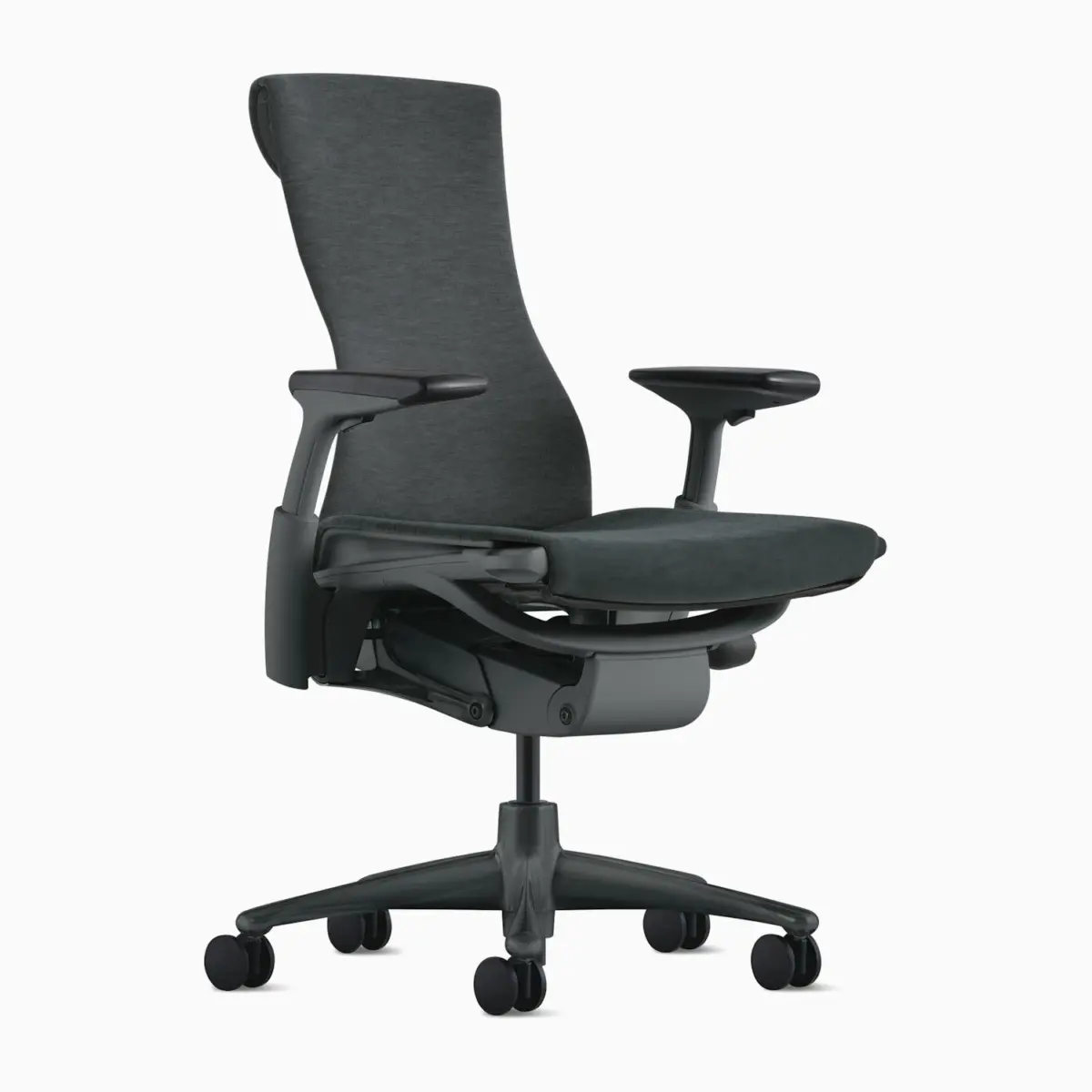 Herman Miller Embody
Check price
Herman Miller Embody at a glance
Who it is for
- You sit for most of the day, fidget and change position often, and care most about how pressure spreads across your back and seat.
Who should skip
- You are well outside average height, since the Embody is listed in one size while the Aeron comes in three.
Key specs
| Seat and back | Matrix of pixels that conforms to micro-movements |
|---|---|
| Back | Spinal design, manually adjusted to your back |
| Design focus | Pressure distribution, natural alignment, healthy movement |
| Size | One size |
| Listed color | Dark Carbon |
| Designers | Jeff Weber with Bill Stumpf |
| GTIN | 001001473596 |
A chair designed around pressure, not posture alone
Most ergonomic chairs aim to hold you in one correct position. Herman Miller takes a different line with the Embody, calling it the modern benchmark for pressure distribution, natural alignment and healthy movement. The thinking is that nobody holds one pose from morning to evening, so a chair should support you as you shift through a whole workday.
That suits people whose work keeps them seated but restless: leaning in to read code, sitting back on calls, curling a leg under during a long edit. The Embody is designed to follow those changes rather than push you back to a single setting.
How the pixel matrix differs from mesh
Where the Aeron stretches one mesh across a frame, the Embody's seat and back are made of a matrix of small pixels. Each part can move a little on its own, so the surface conforms to micro-movements automatically. The aim is fewer pressure points, the spots that start to ache after a few hours.
This is passive ergonomics: it happens without you touching a lever. Herman Miller pairs it with active ergonomics, the parts you set yourself, which is where the spine comes in.
Setting the spinal back
The Embody's back is shaped like a spine and fine-tuned by hand to fit yours. Get it right and the back follows your natural curve instead of pressing a fixed lumbar bump into one spot. Take the time to adjust it with your usual working posture, not while sitting stiffly upright, because that is the position it needs to support.
If someone else uses the chair, expect to reset it. A back tuned to one person rarely suits another, which is why a shared desk is better served by the no-adjustment Setu.
Who gets the most from it
The Embody makes most sense for people at a desk from morning to evening, five days a week. Spread over that many hours, the premium is easier to justify. If your desk time is shorter, or if you want sizing beyond one frame, the Aeron or the Sayl is the better fit.
It also helps to be clear about what the Embody will not do. It will not make up for a desk that is the wrong height or a screen set too low, and its single frame cannot shrink for a petite sitter. Pair it with a desk setup that puts your forearms level and your screen near eye height, and the chair has a fair chance to do its job.
FAQ: Herman Miller Embody
Is the Embody better than the Aeron?
It is different rather than better. The Embody focuses on spreading pressure and following your movement, while the Aeron focuses on sizing and holding a supported posture. Restless sitters of average build tend to suit the Embody. People who are notably short or tall usually suit the Aeron because of its three sizes.
Does the Embody feel cool like a mesh chair?
Herman Miller does not market the Embody on airflow the way it does Pellicle mesh. If a cool seat is your top priority in a warm room, the all-mesh Aeron is the more direct answer. A desk fan or a room that stays comfortable makes the difference smaller.
How long does it take to set up?
Plan on a short session when the chair arrives to set seat height and shape the spinal back, then small tweaks over the first week as you notice where it presses or gaps. After that, the pixel matrix handles day-to-day changes without further adjustment.
Other options worth a look
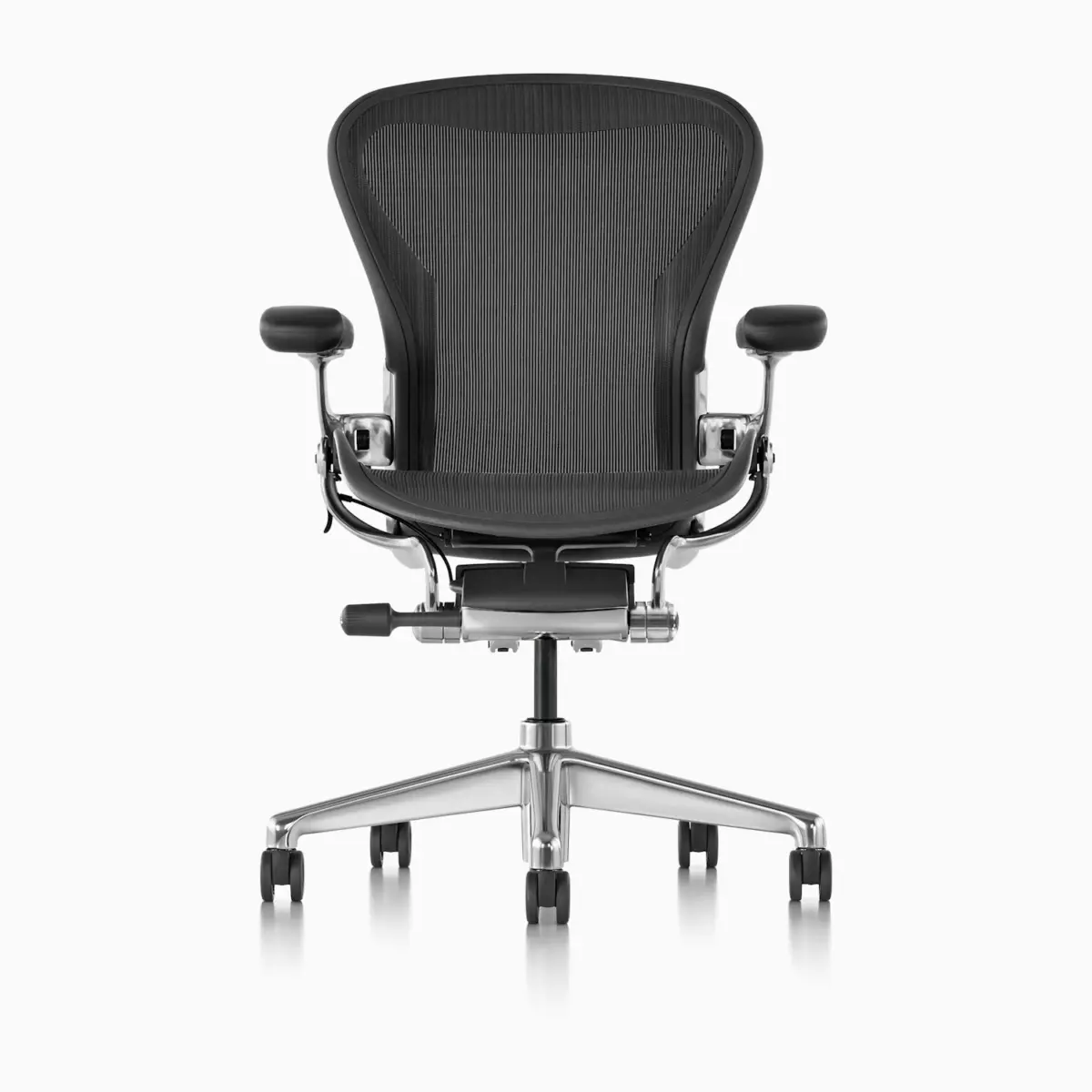 Herman Miller AeronThree frame sizes and PostureFit SL for sitters outside average height.
Check price
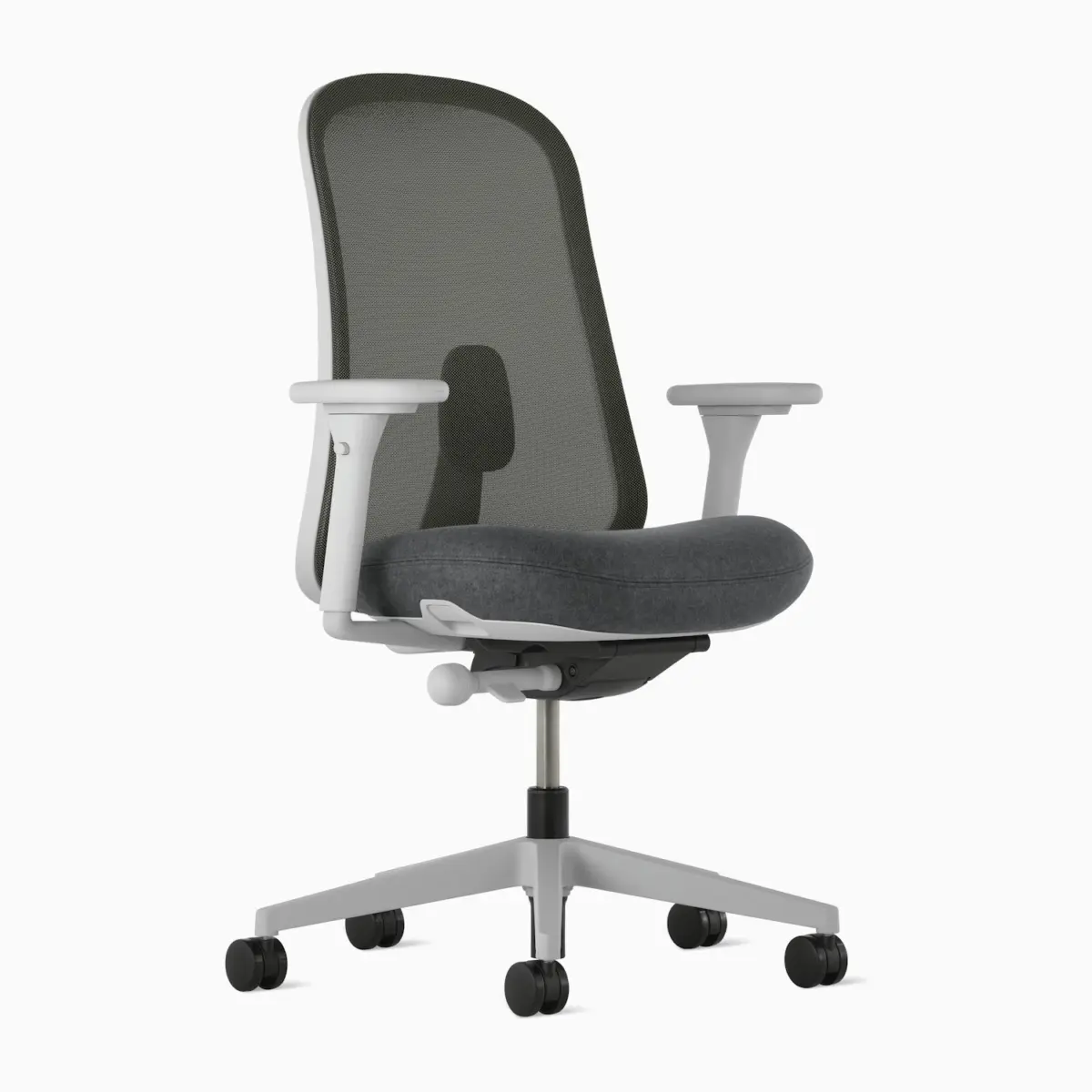 Herman Miller LinoIntegrated lumbar support and a padded seat with fewer settings to manage.
Check price
Next steps
If this one is close but not quite right, the shortlist sets it beside the other picks, each named for the buyer it suits.