

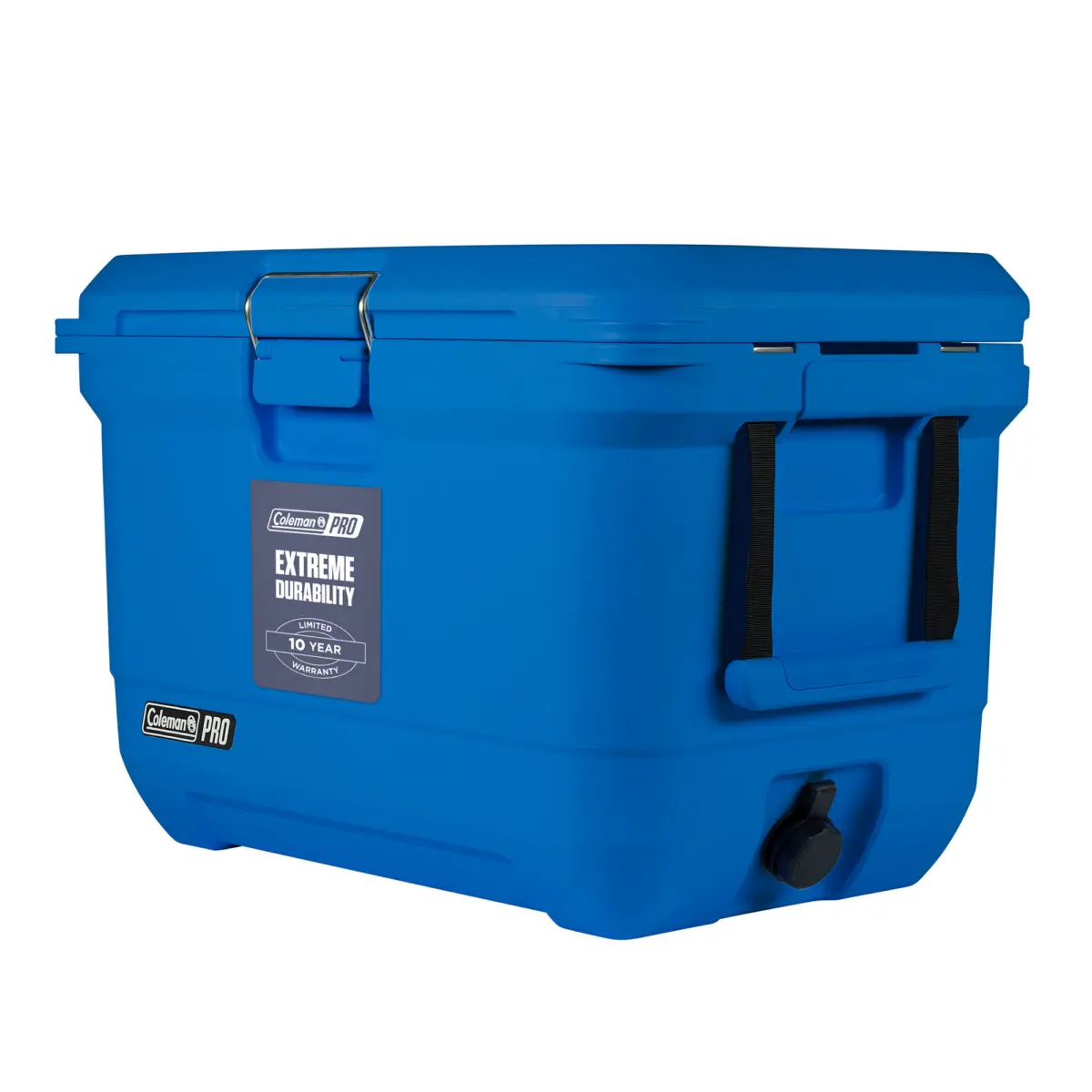
Most cooler disappointments come from two mistakes: buying the wrong type for the trip, and packing it badly. A good hard cooler packed carelessly can lose its ice faster than a modest one packed well. This guide covers when to choose hard or soft, how to read the cold claims brands print, and the habits that stretch your ice.
Key insights
- Coleman Pro 45-Quart Hard Cooler: Stays cold up to 4 days, according to Coleman
- Coleman Classic Series 52-Quart Hard Cooler: Holds up to 40 cans and 26 lbs of ice
- Coleman Pro 24-Can Soft Cooler: Stays cold up to 35 hours, according to Coleman
What a hard cooler does better
Hard coolers win on ice retention because they have room for thick insulation in the walls and lid. Coleman's Pro hard coolers, for example, use walls up to 2 inches thick, and the brand rates the 45 and 55-quart models for up to 4 days. Its 120-quart Classic Series Marine chest is rated to keep ice for up to 6 days.
A rigid box also works as furniture. Many hard coolers have lids rated as seats, cup holders molded into the top and drain plugs for meltwater. They stack, they sit flat in a truck bed and they shrug off rough handling.
The costs are weight and bulk. Even empty, a large hard cooler takes up a real share of a trunk, and once full it often needs two people to move.
Where a soft cooler is the smarter choice
Soft coolers are about portability. A shoulder strap or top handle lets one person carry drinks and lunch from the car to the beach, the sidelines or a picnic table while carrying something else.
Their hold times are shorter and measured in hours. Coleman rates its Pro 24-Can Soft Cooler for up to 35 hours and its XPAND soft coolers for up to 24 hours. That covers a day trip or an overnight, which is exactly what most soft cooler owners need.
On camping trips, a soft cooler shines as the second cooler. Put the drinks people reach for constantly in the bag, and the food cooler stays closed and cold.
How to read brand cold claims
Brand ice figures are best-case numbers. They generally assume a cooler packed full, with plenty of ice, kept closed and out of direct heat. Real trips involve opening the lid, warm drinks going in and afternoons in the sun.
Use the figures to compare coolers within the same brand, where test conditions are likely similar, rather than as a promise. A cooler rated for 4 days will usually beat one rated for 35 hours by a wide margin, but neither will hit its number in a hot open campsite. Where a brand says only multiday, as Coleman does for its Classic Series 52-Quart, expect a solid weekend with good habits.
Where to start
| Role | Model | Price | Why | Buy |
|---|---|---|---|---|
| Best for most camping trips | Coleman Pro 45-Quart Hard Cooler | $199.99 | Our top camping cooler, rated for up to 4 days with 2-inch walls. | Check price |
| Best on a budget | Coleman Classic Series 52-Quart Hard Cooler | $54.99 | The budget hard cooler, with room for 40 cans and TempLock FX insulation. | Check price |
| Best soft cooler | Coleman Pro 24-Can Soft Cooler | $79.99 | A shoulder-carry soft cooler rated for up to 35 hours, ideal as a drinks bag. | Check price |
Packing habits that keep ice longer
- Pre-chill the cooler. Bring it indoors the night before and put a sacrificial bag of ice or some frozen bottles inside. A warm cooler spends its first hours cooling its own walls.
- Chill everything first. Drinks and food that go in cold take nothing from the ice. Freeze meat you will cook on day two or three so it acts as ice until then.
- Use block ice under cubes. Blocks melt more slowly; cubes fill the gaps and cool items quickly.
- Fill the empty space. Air warms quickly. Pack tightly, and fill gaps with extra ice or a towel.
- Open it less. Plan meals so you take out several items at once, and keep drinks in a separate cooler.
Keep the cooler out of the heat
Where the cooler sits matters as much as what is inside. Keep it in shade all day, move it as the sun moves, and lift it off hot sand or pavement onto a mat or a log. Draping a light-colored towel or blanket over the lid also helps reflect sun.
In the car, the trunk of a parked vehicle gets very hot, so carry the cooler in the cabin with the air conditioning on when you can. At night, a cooler left in the open stays cooler than one shut in a hot car, as long as wildlife cannot reach it.
Meltwater and food safety
Cold meltwater helps keep contents chilled, so do not rush to drain it. Pour it off once it starts soaking packaging that should stay dry, or each time you top up the ice. Pack raw meat in sealed containers at the bottom so leaks cannot reach ready-to-eat food.
A fridge thermometer in the cooler is a cheap way to check that perishables stay at 40°F or below, the cutoff food safety agencies use. When ice is mostly water and the thermometer creeps up, it is time to restock.
FAQ
Is block ice or cubed ice better?
Use both. Block ice has less surface area, so it melts more slowly and anchors the cooler's cold for days. Cubes pack into the gaps and chill drinks quickly. A common setup is a block or two on the bottom with cubes poured over and around the contents.
Do I need a hard cooler for a weekend camping trip?
For food over two or more nights, yes, unless you can buy ice along the way. A soft cooler alone suits day trips and single overnights. The best weekend setup for most families is one hard cooler for food and a soft cooler for drinks.
Are ice packs better than ice?
Ice packs do not leave meltwater, which keeps food dry and makes them ideal for soft coolers. Loose ice cools faster because it touches more surfaces. Many campers use frozen packs or frozen water bottles at the bottom and loose ice on top.
How do I stop a cooler from smelling?
Empty it as soon as you get home, wash it with warm water and mild soap, rinse and leave it open to dry fully before storing. A spoonful of baking soda in the wash water helps with stubborn odors. Store it with the lid propped open.