

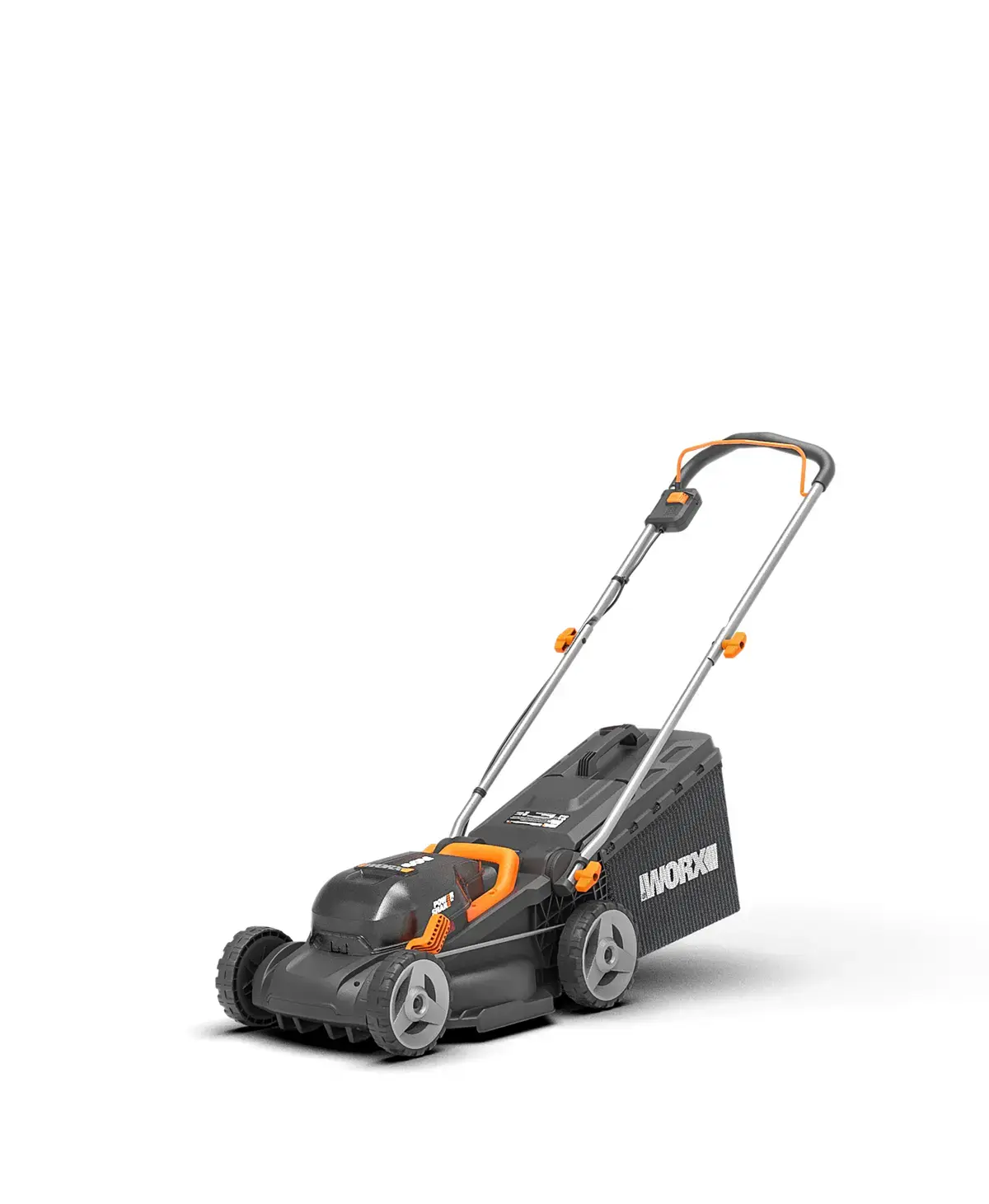
Most people shopping for a walk-behind mower face two questions at once: battery or gas, and how wide a deck. The answers depend on the same thing, the size and shape of your lawn. This guide works through both so you can rule out the wrong machines before comparing models.
Key insights
- WORX 40V 14-inch brushless mower: 14-inch deck rated for lawns up to 1/8 acre
- WORX 40V 17-inch brushless mower: 17-inch deck rated for yards up to 1/8 acre
- WORX Nitro 40V 21-inch self-propelled mower: 21-inch deck
Where cordless mowers now make more sense than gas
For small and medium suburban lawns, a cordless mower removes most of the hassle that comes with gas. There is no fuel to buy and store, no oil to change, no spark plug or carburetor to clean, and no pull cord. You press a button and mow.
Battery mowers are also far quieter, which matters if you mow early or live close to neighbors, and they produce no exhaust at the handle. Brushless motors, now standard on WORX's mower range, add efficiency and have no brushes to wear out.
The cordless case is strongest where one or two battery sessions cover the whole lawn. That describes the majority of town and suburban yards.
When gas is still the better tool
Gas keeps an edge on very large lawns, rough ground and grass that is regularly left to grow long. A tank of fuel refills in seconds and runs until it is empty, while batteries need recharging, and spare packs add cost.
If you mow well past half an acre, cut overgrown fields, or mow other people's lawns as a side job, gas or a riding mower is still the practical choice. For everyone else, the question is less whether cordless can cope and more which battery mower fits the lawn.
Matching deck size to your yard
Deck width sets how many strips you walk. Narrow decks are slower on open grass but easier to steer around beds, trees and paths. Wide decks finish open lawns faster but take more space to turn and store.
- 14-inch: small, broken-up lawns, side strips and townhouse yards. WORX rates its 40V 14-inch WG735 for up to 1/8 acre.
- 16 to 17-inch: a typical small back yard. WORX gives its 40V 17-inch WG745 the same 1/8-acre rating with a wider cut.
- 21-inch: full suburban lawns and anyone replacing a gas walk-behind, which almost always uses this width. WORX puts its self-propelled Nitro models here.
Measure your lawn rather than your lot. Driveways, beds and the house footprint can take a large share of a plot, so the grass area is often smaller than you expect.
Where to start
| Role | Model | Price | Why | Buy |
|---|---|---|---|---|
| Best for tiny lawns and tight storage | WORX 40V 14-inch brushless mower | $259.99 | A compact folding push mower for small, awkward lawns up to 1/8 acre. | Check price |
| Best for most small yards | WORX 40V 17-inch brushless mower | $299.99 | Our first pick for most small yards, with IntelliCut and 2-in-1 bagging and mulching. | Check price |
| Best self-propelled mower for bigger lawns | WORX Nitro 40V 21-inch self-propelled mower | $449.99 | A 21-inch self-propelled option for bigger lawns and gas mower owners making the switch. | Check price |
Push or self-propelled
On a flat lawn of 1/8 acre or less, a push mower is lighter, simpler and fine. Self-propelled drive starts to pay off on slopes, on larger lawns where a session runs long, and for anyone who finds pushing a loaded mower hard on the back.
Battery mowers carry the weight of their packs, so a 21-inch cordless deck is a lot to shove uphill. That is why WORX pairs its 21-inch Nitro decks with powered drive.
Batteries, voltage and running costs
Higher voltage generally means more power for wider decks and powered drive. WORX uses 20V for its smallest 14-inch mower and 40V for its 14, 17 and 21-inch models, building both around its Power Share battery system.
Batteries are the costly consumable in a cordless mower. Before you buy, check what the listing includes, how many packs come in the box, and whether you already own compatible packs from trimmers or blowers. Store batteries indoors over winter, since cold sheds shorten their life.
Beyond batteries, upkeep is light: keep the blade sharp, clear clippings from under the deck and check the wheels and height lever once a season.
Bagging, mulching and blade options
Mulching chops clippings fine and leaves them on the lawn as a light feed. Bagging gives a cleaner finish and keeps weed seeds from spreading. A 2-in-1 deck, such as the WG745's, lets you switch with the season.
Dual-blade decks, like the one on WORX's Nitro WP775, stack a second blade to cut clippings again, which suits owners who mulch most weeks. Whatever you choose, a dull blade tears grass and leaves brown tips, so plan on sharpening or replacing it each season.
FAQ
Is a cordless mower cheaper to run than gas?
Usually, yes, once you own the batteries. Charging costs little, and you skip fuel, oil, spark plugs and carburetor cleaning. The big running cost is eventual battery replacement, so treat packs well: store them indoors, avoid leaving them flat for months and use the brand's charger.
How do I measure my lawn size?
Pace or tape the length and width of each grassy area and multiply, then add the areas together. An acre is 43,560 square feet, so 1/8 acre is about 5,445 square feet. Compare the total with the brand's yard rating rather than your lot size.
Will a cordless mower handle wet grass?
It can, but no mower cuts wet grass well. Damp clippings clump under the deck and clog bags. If you must mow after rain, raise the cutting height, empty the bag more often and clean under the deck afterwards with the battery removed.
Is a 21-inch mower too big for a small yard?
It will work, but it is harder to steer around beds and needs more storage space. On a lawn of 1/8 acre or less, a 14 or 17-inch deck is easier to live with and the time saved by a wider deck is small.