

A robot vacuum in a pet home works harder than the same machine in a home without animals. It meets more hair, more grit, more bowls and more surprises on the floor. This guide covers the features that decide whether a robot copes with that load, so you can read a spec sheet and know which lines actually matter.
Key insights
- Dreame L40s Ultra: 19,000Pa Vormax suction
- MOVA E30 Pro Plus: 19,000Pa suction with Smart Carpet Boost
- MOVA P50 Ultra: Dock auto-empties, auto-washes and auto-dries
Hair wrap is the problem to solve first
The most common way a robot fails pet owners is not weak suction. It is hair winding around the rollers, the side brush arms and the wheel axles until the robot drags itself around the room, picking up less on every pass.
Brands answer this with named brush designs. Dreame uses a HyperStream Detangling DuoBrush on several models, MOVA uses a TurboWave Anti-Tangle DuoBrush and a MaxiReach Zero-Tangle side brush on the E30 Pro Plus, and other MOVA robots list CleanChop or triple anti-tangle systems. When a listing names one of these, it tells you the brand designed for hair. When it names none, assume a standard roller and plan on clearing it.
Coat type changes how much this matters. Short, coarse dog hair tends to fall into the bin. Long, fine cat hair and the undercoat of double-coated breeds are the ones that wrap.
Pick a dock that matches how you clean
Robots come in three broad dock levels. The simplest is a charging base only, which leaves you emptying a small onboard bin after most runs. In a shedding home, that gets old fast.
The middle level is an auto-empty base. It pulls debris out of the robot into a larger container, and MOVA rates the E30 Pro Plus base at up to 90 days of dust storage. Fur fills bags faster than household dust, so read capacity claims as an upper limit.
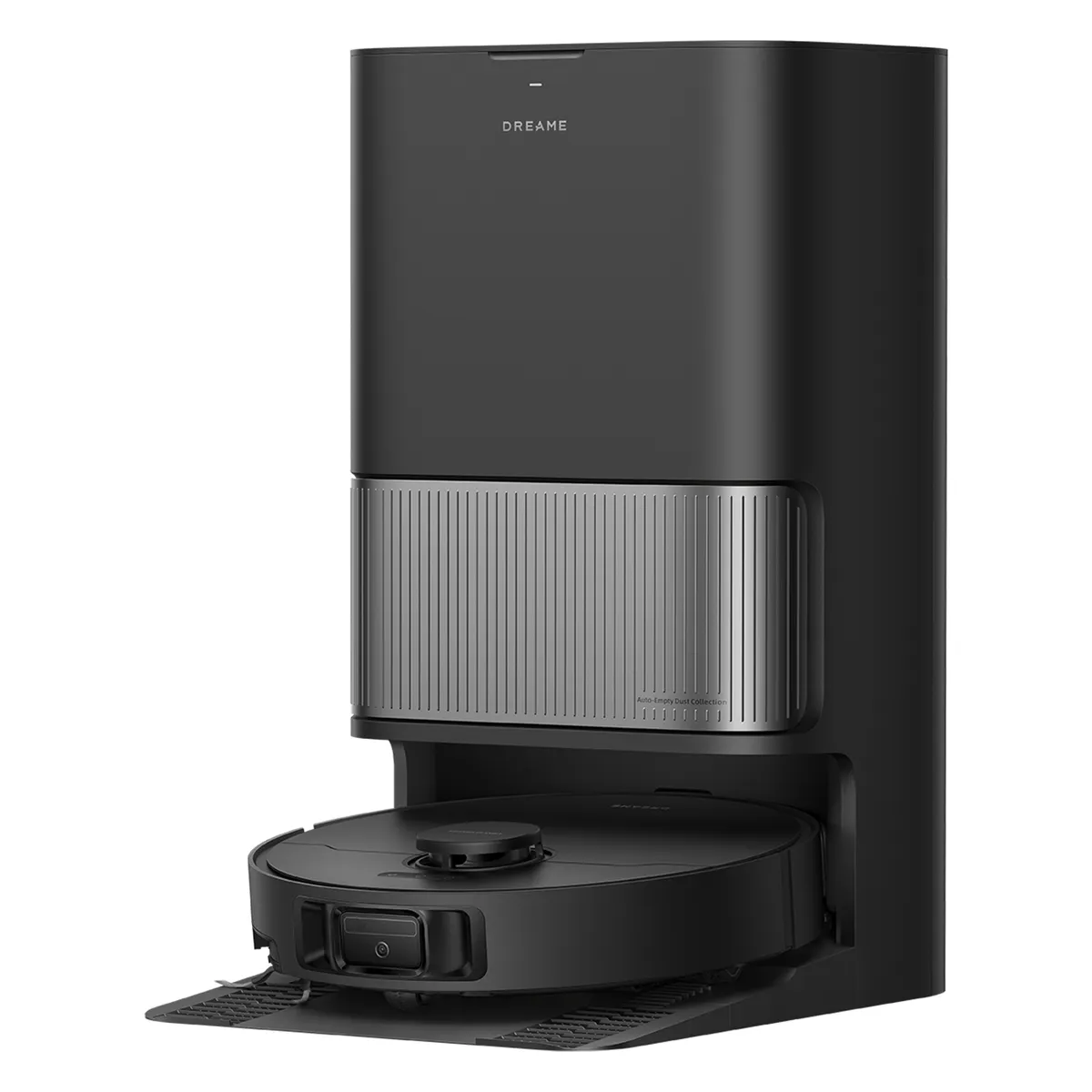
The top level is a full self-cleaning dock that also washes and dries mop pads, like the ones on the MOVA P50 Ultra and the Dreame L40s Ultra. These earn their place if you have hard floors that collect paw prints, drool or tracked-in mud. If your home is mostly carpet, the extra cost buys little.
Carpets, rugs and the mop problem
Pets claim rugs. A robot that mops needs a way to protect them, or you end up switching mopping off. Look for mop lifting, which raises the pads on carpet. MOVA calls its version CleanLift on the P50 Ultra.
Carpet suction boost is the other half. Sensors detect carpet and raise suction automatically, as MOVA's Smart Carpet Boost does on the E30 Pro Plus. Fur sinks into pile, and extra suction there pulls it out without wasting battery on hard floors, where hair sits loose on top.
Where to start
| Role | Model | Price | Why | Buy |
|---|---|---|---|---|
| Best for most pet homes | Dreame L40s Ultra | $569.99 | Our first pick for most pet homes, with a detangling DuoBrush and a self-cleaning PowerDock. | Check price |
| Best on a budget | MOVA E30 Pro Plus | $229 | The budget route to anti-tangle brushes and an auto-empty base. | Check price |
| Best mid-range self-cleaning dock | MOVA P50 Ultra | $429 | A mid-range dock that empties, washes and dries, plus CleanLift for rugs. | Check price |
Obstacles that pets leave behind
Toys, chews, leashes and bowls all end up on the floor, and older robots either push them around or get stuck on them. Modern avoidance systems use sensors and cameras to recognize objects and steer around them. Dreame quotes 280+ recognized objects for the X60 Ultra and names its systems 3DAdapt and OmniSight on other models.
Pet accidents are the obstacle everyone worries about. Recognition helps, but no brand promises to catch every mess. With a puppy or an elderly pet, schedule runs for when someone can check the floor first.
Climbing height matters too. A pet gate rail or a thick bed edge can stop a robot that only clears low thresholds. Dreame lists 1.57in for the L40s Ultra and 3.47in for the X60 Ultra.
Running costs pet owners should expect
The purchase price is only part of the bill. Auto-empty docks use dust bags, and a heavy shedder fills them faster. Self-washing docks go through mop pads and, on some models, cleaning solutions. Brushes and filters wear quicker when they process fur every day.
Before you buy, check that the brand sells replacement bags, pads, brushes and filters through its own store. A robot is only as useful as its supply of parts, and a dock waiting on a bag does nothing for the fur on your floor.
Match the robot to your pet and your home
One short-haired cat in an apartment with hardwood floors needs far less than two shedding dogs in a large house with rugs everywhere. Start with the coat, then the floor type, then the size of the home.
- Short coats, mostly carpet: an anti-tangle brush and an auto-empty base cover it.
- Long coats or double coats: make a named detangling brush a requirement.
- Hard floors near bowls and doors: add a self-washing dock and mop lifting.
- Large homes with low furniture: look for a slim body and tall climbing.
FAQ
Is suction power the most important number for pet hair?
Not on its own. Past a solid baseline, the brush matters more, because a tangled roller loses pickup no matter how strong the motor is. Use suction to compare robots with similar brush designs, and give it extra weight if most of your floors are carpet.
Do I need a robot that mops if I have pets?
Only if you have hard floors that get paw prints, drool or spills. In a mostly carpeted home, a vacuum-only robot with an auto-empty base is the better use of money. If you do mop, choose a model that lifts its pads on rugs.
Can a robot vacuum replace my regular vacuum?
It can handle most daily fur on open floors, but keep a stick or upright vacuum for stairs, upholstery, pet beds and car seats. Think of the robot as the thing that stops hair building up, not the only cleaning tool in the house.
Will a robot vacuum scare my pet?
Some animals are wary at first. Run the robot while you are home for the first few cleans so your pet can see it is harmless, and keep the dock away from feeding and sleeping spots. Most cats and dogs learn to ignore it.