

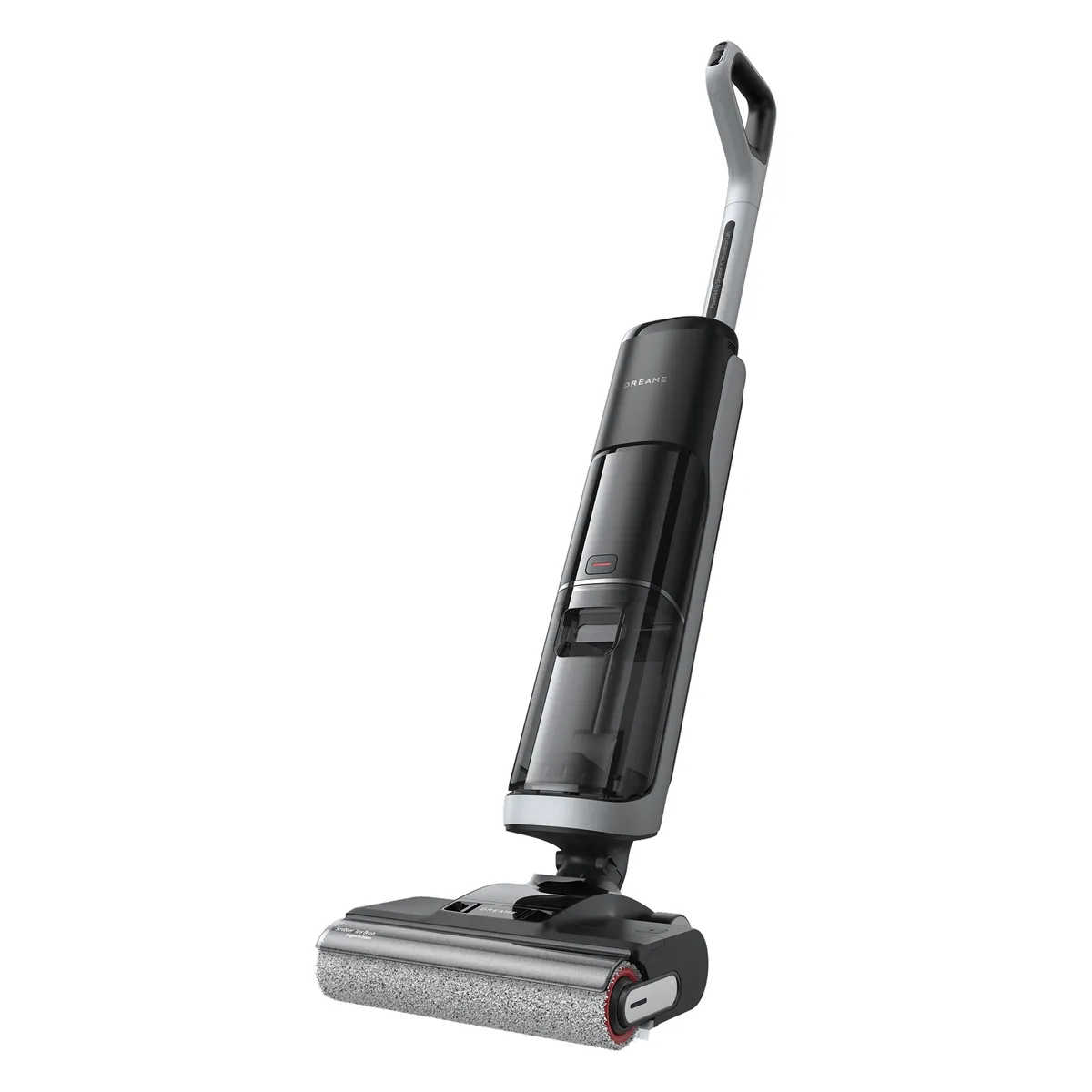
A wet-dry vacuum looks simple on a store page: it vacuums and mops at the same time. The differences that matter show up later, in how far it reaches under furniture, how it copes with hair and what state the roller is in the next morning. This guide walks through each of those points so you can match a machine to your floors and your routine.
Key insights
- Dreame H14: 180° Lie-Flat Reach
- MOVA K20 Turbo: 18,000Pa suction
- Dreame H15 Pro: 185°F heated floor cleaning
Start with your floors
These machines are made for sealed hard surfaces: porcelain and ceramic tile, luxury vinyl, laminate and sealed hardwood. Each pass leaves a thin film of water that dries within minutes, which those floors shrug off.
Unsealed or oiled wood, waxed floors and some natural stone are a different story. Repeated wetting can raise the grain or dull a finish, so check what your flooring maker allows before you buy. If you are unsure, wipe a hidden corner with a damp cloth and see how the finish reacts.
Rugs are the other question. Most wet-dry models are not meant for carpet, so a home with large rugs needs either a model that lists carpet cleaning, such as Dreame's H15 Pro CarpetFlex, or a separate vacuum for the soft areas.
How the tanks and roller work together
Inside, a wet-dry vacuum runs two water circuits. Clean water, often mixed with a little cleaning solution, is fed onto a spinning roller. Suction then pulls the dirty water, crumbs and hair off the roller into a separate tank, while a scraper squeezes the roller so less water is left behind.
The weak point is the motor, because the air it pulls carries wet debris. Brands add separation systems to keep liquid and solids away from it. Dreame calls this a liquid separation motor on the H14 and solid-liquid waste separation on the H12 Pro FlexReach. Look for it, since a motor that takes in water is usually the end of the machine.
Self-cleaning, drying and the smell problem
Ask owners what they dislike about wet-dry vacuums and the answer is rarely cleaning power. It is the sour smell of a roller left damp in its base overnight. Most current models dock to self-clean, but the depth of that cycle differs a lot.
The basic version is a one-press rinse, as on the MOVA K20 Turbo and the Dreame Aero, which flushes clean water through the roller and into the dirty tank. A step up is a hot rinse, such as the 60°C wash on the H14. At the top, the H15 Pro self-cleans at 212°F and follows with heat drying, while the H12 Pro FlexReach lists odor-free self-drying.
Prioritize drying if you clean in the evening and the machine sits until the next day. Without it, you need to take the roller out to air, a step most people forget.
Where to start
| Role | Model | Price | Why | Buy |
|---|---|---|---|---|
| Best for most homes | Dreame H14 | $349.99 | Our pick for most homes: lie-flat reach, dual edge cleaning and a 60°C hot water roller wash. | Check price |
| Best on a budget | MOVA K20 Turbo | $199 | The budget choice, with 18,000Pa suction, Smart Dirt Detection and an 8.82lbs body. | Check price |
| Best premium pick | Dreame H15 Pro | $649.99 | The premium option for sticky messes, with 185°F cleaning and heat drying after a 212°F self-clean. | Check price |
Reach under furniture and along walls
A standard wet-dry vacuum needs its handle near upright to work, which stops it at the edge of a bed or sofa. Lie-flat designs fix this. Dreame lists 180° lie-flat reach on the H14, the H12 Pro FlexReach and the H15 Pro, letting the handle drop level with the floor. The Aero takes a different route with a 3.88in ultra-slim body.
Edges matter as much in kitchens and hallways. A head that cleans to both of its ends, which Dreame calls Dual Edge Cleaning, lifts the line of dirt along baseboards. The H15 Pro goes further with a robotic arm, the GapFree AI DescendReach, aimed at the last gap between head and wall. Our H14 vs H15 Pro comparison looks at whether that arm is worth having.
Hair, pets and the roller
A wet roller that collects long hair is harder to clear than a dry brush, because the strands mat together with grime. If anyone in your home has long hair, or a pet sheds, give anti-tangle features real weight.
Look for named systems rather than vague claims. Dreame uses TangleCut on the H12 Pro FlexReach and TangleCut 2.0 on the Aero, designed to cut hair before it wraps. MOVA lists an anti-tangle brush on the K20 Turbo, and Dreame claims zero hair tangles for the H15 Pro. Without any such feature, plan on cutting hair off the roller by hand now and then.
Battery, weight and running costs
Brands quote battery life in two ways. Dreame gives 35 minutes for both the H14 and the Aero, while it describes the H15 Pro by area covered, 5600+ sq ft on one charge. Quoted figures usually reflect a standard mode, and stronger modes drain the battery faster, so leave some margin in a large home.
Weight is the figure people overlook. MOVA puts the K20 Turbo at 8.82lbs, light enough to carry upstairs, and a full clean tank adds to whatever the spec sheet says.
Running costs are modest but real. Rollers, filters and cleaning solution are consumables, and machines with heaters and robotic parts have more to service. Before buying, check that the brand's store sells spare rollers and filters for the exact model. Our shortlist of wet-dry vacuums for hard floors covers five machines with these points in mind, and the Dreame H14 review looks closely at our pick for most homes.
FAQ
Can I use a wet-dry vacuum on carpet?
Not with most models. A wet roller soaks the pile and can leave a damp, musty patch that takes a long time to dry. Dreame's H15 Pro CarpetFlex is built for hard floors and carpet in one go, but the other machines covered here are meant for sealed hard floors, so vacuum rugs separately.
Can a wet-dry vacuum pick up liquid spills?
Yes, that is part of the job. Spilled milk, juice or water can be pulled straight into the dirty tank, which is easier than soaking it up with towels. A large spill fills the tank quickly, so empty it before carrying on, and run the self-clean afterward so sugary residue does not dry on the roller.
How do I stop the machine from smelling?
Empty and rinse the dirty-water tank after every use rather than leaving it for next time. Let the self-cleaning cycle and any drying stage run to the end. If your model has no drying, take the roller out and stand it somewhere airy. A smell that lingers usually points to a clogged filter that needs washing or replacing.
Is a lie-flat design worth having?
If you have beds, sofas or cabinets with low gaps, yes. Without it, the strip under furniture never gets washed, and that is where crumbs and pet hair collect. In a home with little low furniture, a slim body such as the Aero's covers most needs.