

Salon shampoo ranges are long, and the bottles within one brand can look nearly identical. The trick is to stop reading the marketing first and read your own hair instead. Four questions about thickness, scalp, damage and color narrow a shelf of options to two or three that will actually suit you.
Key insights
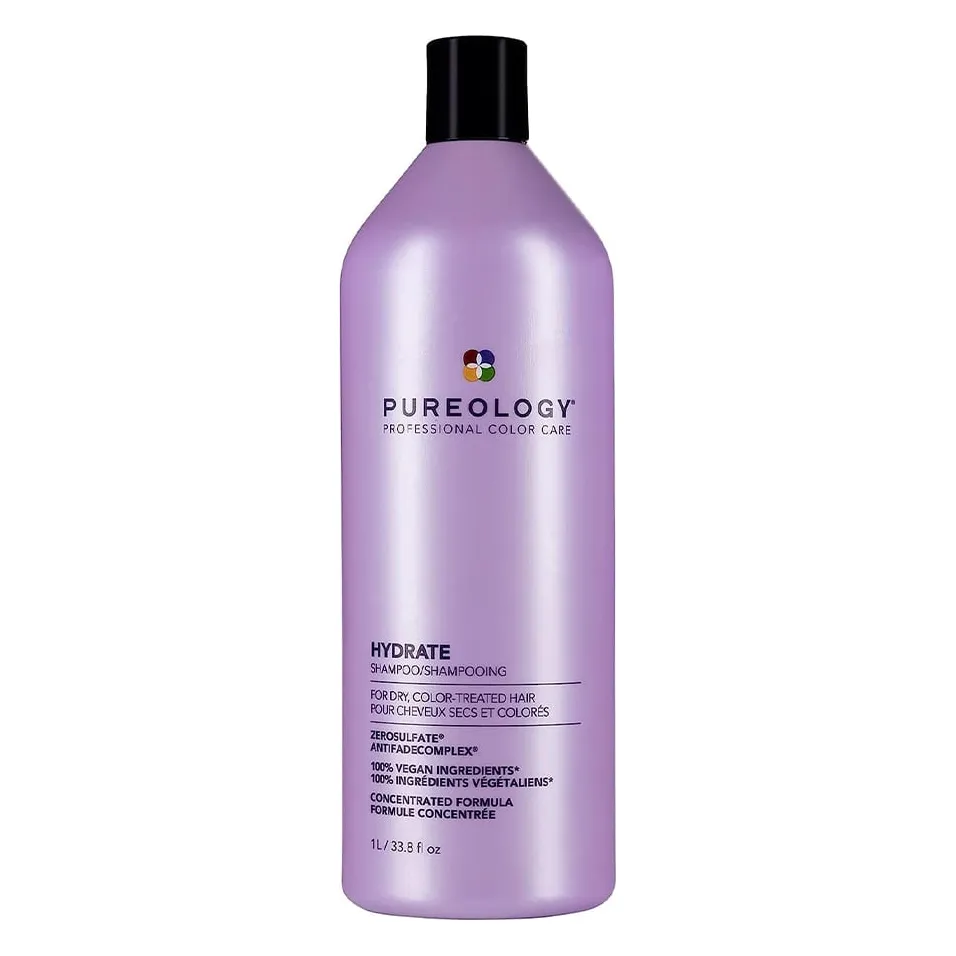
- Pureology Hydrate Shampoo (1L): Vegan, sulfate-free and color-safe
- Kérastase Chroma Absolu Bain Chroma Respect: Sulfate-free color-care shampoo
- Kérastase Première Bain Décalcifiant Réparateur: Removes calcium build-up from shower water, according to Kérastase
Question one: how thick is each strand
Thickness here means the width of a single hair, not how much hair you have. Roll one strand between your fingers. If you can barely feel it, your hair is fine.
If it feels like a thread, it is coarse. Most people sit somewhere between.
This matters more than any other factor, because it decides how much richness your hair can carry. Fine hair goes flat under heavy formulas, so look for words like sheer, light or volume. Pureology Hydrate Sheer and Pure Volume, and Kérastase Chroma Absolu Bain Chroma Respect, are all pitched at finer hair. Coarse or very thick hair can take rich formulas such as Pureology Hydrate or Kérastase Nutritive Bain Satin Riche.
Question two: what is your scalp doing
Shampoo is mainly for the scalp, so its condition sets the baseline. A scalp that turns oily within a day needs a formula that cleans properly, even if your ends are dry. A scalp that feels tight or flaky after washing wants something gentle.
Mixed hair, with oily roots and dry ends, is common and often handled badly. One approach is a balancing shampoo on the scalp, such as Kérastase Spécifique Bain Divalent, which the brand says reduces excess oil while gently nourishing the lengths. The other is to wash with a moisture shampoo but concentrate it at the roots and rely on conditioner for the ends.
Question three: dry or damaged
People use the two words interchangeably, but they call for different formulas. Dry hair lacks moisture. It feels rough, tangles and looks dull, but it still stretches and bends without snapping.
Damaged hair has lost strength. It breaks when brushed, splits at the ends and can feel gummy when wet.
For dryness, look for hydrating or nutritive formulas: Pureology Hydrate and Nanoworks Gold, or Kérastase Nutritive. For damage, look for repair language and proteins: Pureology Strength Cure, or Kérastase Première and Résistance. If you have both, start with repair, since a strong strand holds moisture better.
Where to start
| Role | Model | Price | Why | Buy |
|---|---|---|---|---|
| Best big bottle for thick, dry colored hair | Pureology Hydrate Shampoo (1L) | $90 | For normal to thick hair that is dry and colored, in a liter bottle for regular users. | Check price |
| Best for fine color-treated hair | Kérastase Chroma Absolu Bain Chroma Respect | $48 | A light, sulfate-free color shampoo for fine to medium hair that fades fast. | Check price |
| Best for hard-water damage | Kérastase Première Bain Décalcifiant Réparateur | $48 | For damaged hair in hard-water homes, built to remove calcium build-up. | Check price |
Question four: is your hair colored or lightened
Colored hair needs a gentler cleanser to slow fading, which is why color-care shampoos are almost always sulfate-free. Pureology labels many of its shampoos for color-treated hair, and Kérastase has the Chroma Absolu line for color.
Lightened blonde, gray and white hair has an extra issue: yellow or orange tones creeping in. A purple shampoo neutralizes those tones. Kérastase Blond Absolu Bain Ultra-Violet and Pureology Strength Cure Blonde are the purple options from these two brands. Use one a few times a week, not every wash, alongside your main shampoo.
Two extra factors: frizz and water
Frizz is a texture problem as much as a dryness one. If humidity is your enemy and your hair is colored, Pureology Smooth Gloss is built for frizz-prone, color-treated hair. Kérastase offers Gloss Absolu Bain Hydra-Glaze for fine to medium hair prone to frizz, and Curl Manifesto for curls.
Hard water is the factor most people overlook. Minerals in tap water coat the hair and make it stiff and dull. If you see scale on your taps, a shampoo that targets that build-up, like Kérastase Première, can fix what no amount of conditioner will.
Putting it together
Write down your four answers and look for a shampoo whose label names at least two of them. Fine, colored, slightly dry hair points to Chroma Respect or Hydrate Sheer. Thick, colored, very dry hair points to Pureology Hydrate.
Colored hair that breaks points to Strength Cure, and damaged hair in a hard-water area points to Première. Then buy the matching conditioner, since both brands design their shampoos to work as part of a pair.
FAQ
Should I change shampoo with the seasons?
Many people do. Winter heating and cold air dry hair out, so a richer formula helps. Humid summers bring frizz and a faster-oiling scalp, so a lighter or smoothing shampoo can feel better. Keeping two bottles and switching when your hair changes is a reasonable habit.
Do I need to stick to one brand for shampoo and conditioner?
No, but brands design their pairs to work together, and their headline results usually assume you use both. Mixing is fine for everyday care. If you want the result a brand quotes, use its matching conditioner.
What does sulfate-free change for me?
Sulfates are strong cleansers that create big lather. Leaving them out makes a shampoo gentler, which helps colored and dry hair. Expect less foam, and do not add more product just to chase lather.
How do I tell if a shampoo is too heavy for me?
If your hair looks flat at the roots or feels coated by the end of the first day, the formula is too rich. Try using less, rinsing longer, or moving to the lighter version in the same range.