

Protein powders look interchangeable on a shelf, but the source of the protein shapes how it digests, how it tastes and who can take it. This guide explains the four main types, what to read on the label, and where certifications fit in, so you can pick a tub you will actually finish.
Key insights
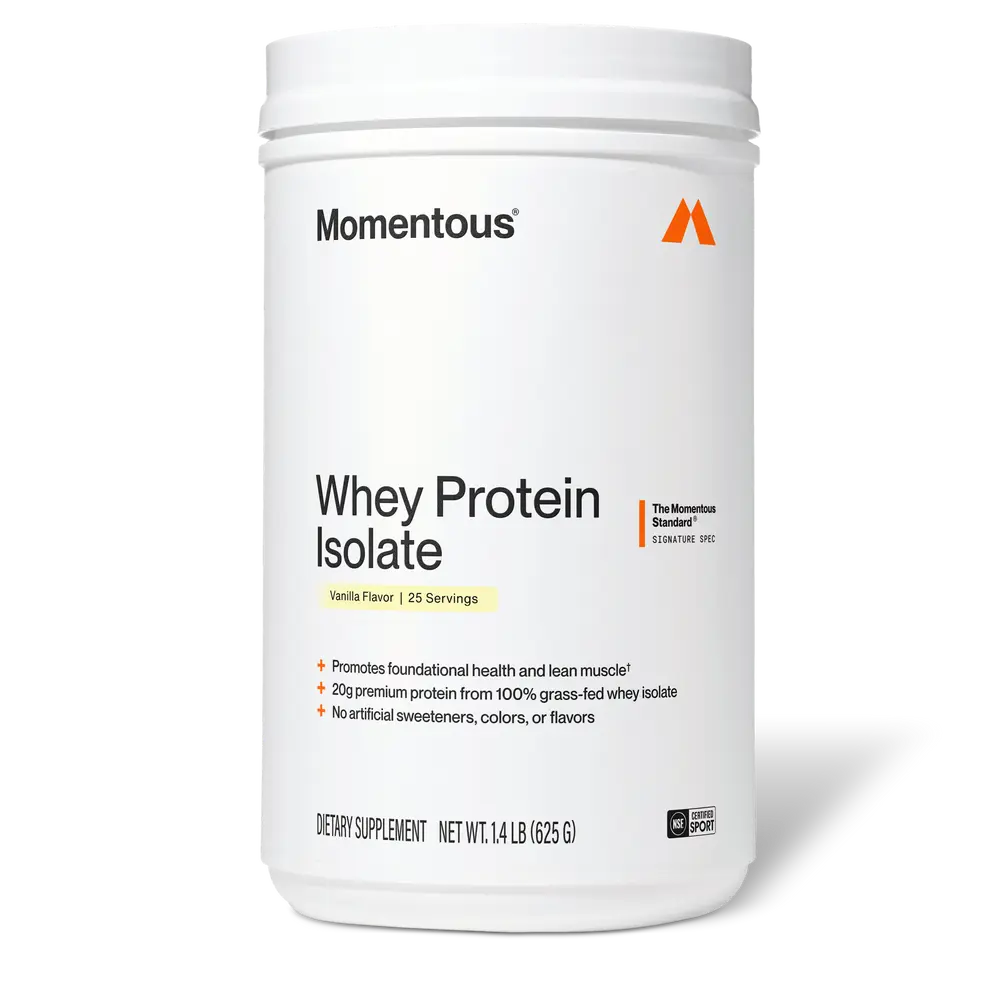
- Momentous Whey Protein Isolate: 20g of grass-fed whey protein per serving
- Orgain Organic Protein: 21g of vegan protein per serving
- Naked Beef Protein: 21g of protein and 17g of collagen per serving
Start by deciding what the powder is for
A powder meant for a quick shake after training needs to mix easily and digest fast. One for breakfast smoothies can be thicker and sweeter. One for the evening, or for long gaps between meals, benefits from protein that digests slowly.
Answer that first, and the type of protein often chooses itself. Most people need only one tub, not a cupboard of them.
It also helps to be honest about whether you need a powder at all. Someone who eats eggs, dairy, fish, beans or meat at most meals often reaches a healthy protein intake from food alone. A powder earns its place when your appetite, schedule or diet makes that hard.
Whey: concentrate, isolate and blends
Whey is the liquid left after milk becomes cheese, dried into a powder. Concentrate is the least processed form and keeps more fat and lactose. Isolate is filtered further, which leaves a higher share of protein and less lactose. Momentous uses grass-fed whey isolate and lists 20g of protein per serving.
Blends combine forms. Jocko Mölk mixes whey concentrate, whey isolate, micellar casein and egg, which Jocko Fuel calls a time-release blend. Blends usually taste richer and fill you up for longer.
Plant protein and the amino acid question
Plant powders use sources such as pea and rice. The concern with plants is that a single source can run short on one or more essential amino acids, which is why brands combine them. Momentous pairs pea and rice in its plant powder, and Orgain says its organic plant protein has a complete amino acid profile.
Expect a slightly thicker texture than whey. Blending with fruit, or mixing with milk or a dairy-free alternative, helps more than any shaker bottle.
Where to start
| Role | Model | Price | Why | Buy |
|---|---|---|---|---|
| Best for most people | Momentous Whey Protein Isolate | $69.99 | Our top pick: grass-fed whey isolate with NSF Certified for Sport status. | Check price |
| Best on a budget | Orgain Organic Protein | $37.99 | The budget plant option, with 21g of organic protein per serving. | Check price |
| Best dairy-free animal protein | Naked Beef Protein | $44.99 | A dairy-free animal protein with 21g of protein and 17g of collagen per serving. | Check price |
Beef protein and collagen
Beef protein powders are made from beef, often from bones and connective tissue, so they contain no milk. Naked Beef Protein lists 21g of protein and 17g of collagen per serving and is described by Naked Nutrition as lactose-free.
Collagen is useful but not a complete protein on its own, since it lacks one essential amino acid. If beef protein is your only powder, make sure the rest of your diet covers a range of protein foods.
Casein for the long gap
Casein is the other main milk protein. It forms a gel in the stomach and digests slowly, which is why people take it before bed. Naked Casein is a single ingredient, micellar casein from US farms, and Naked Nutrition says it helps you stay full for longer. Unflavored casein is thick, so it also works as a pudding-style snack.
Because casein comes from milk, it carries the same allergy limits as whey. Blends such as Jocko Mölk include some casein, so you can get part of the slow-digesting effect without buying a separate tub.
Reading the label before you buy
Check grams of protein per serving, not tub weight. Look at what sweetens it: Orgain avoids artificial sweeteners, Jocko Fuel uses monk fruit, and unflavored casein has none. Note any asterisks, which point to footnotes that qualify a claim.
Then look for an independent certification such as NSF Certified for Sport, which screens for banned substances and checks the label against the contents. If you take medication or manage a health condition, show the label to your doctor before adding a daily powder.
FAQ
Which protein powder type is easiest to digest?
It depends on the person. Many people who struggle with regular whey do better with isolate because it carries less lactose. Those who cannot have dairy at all usually turn to plant or beef protein. If a powder upsets your stomach repeatedly, stop and talk to your doctor.
Is a more expensive protein powder better?
Not automatically. Price often reflects sourcing, certification and flavor work rather than more protein. Compare grams per serving first, then decide whether extras such as NSF certification, organic status or grass-fed sourcing are worth paying for in your own situation and training.
Do I need a protein powder if I am not an athlete?
Not necessarily. Powders are a convenience, not a requirement. They help people who struggle to eat enough protein, such as busy workers, older adults with small appetites or vegans building balanced meals. If you are unsure how much protein you need, a doctor or registered dietitian can give you a figure that fits your health.
Should I choose unflavored or flavored powder?
Unflavored suits cooking, smoothies and anyone who dislikes sweeteners, but it is hard to drink plain. Flavored powders are easier to take with water. If you are unsure, buy a small tub or single-serve packs first and save the large tub for a flavor you know you like.