

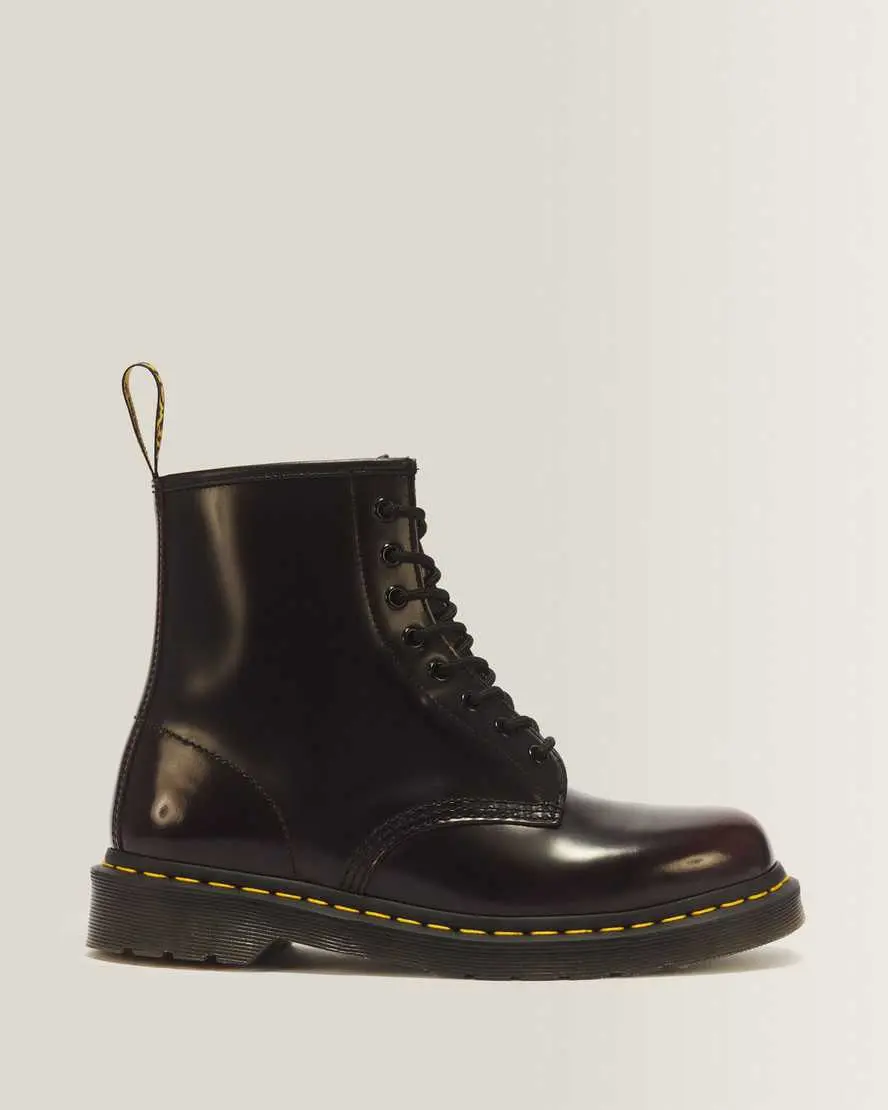
New Dr. Martens have a reputation for blisters, and most of that pain is avoidable. It comes from two things: buying the wrong size and asking firm leather to behave like a sneaker on day one. This guide covers how to choose a size, how to soften a new pair gradually, and which styles ask for the least patience. None of it requires special tools, only a little planning in the first weeks.
Key insights
- Dr. Martens 1460 Arcadia: Eight eyelets and a puffed toe
- Dr. Martens Zebzag Laceless: Tumbled Nubuck upper
Why new Docs feel stiff
Classic Dr. Martens are built with thick leather stitched to a Goodyear welt, then heat-sealed to the sole. That structure is why they last, and it is also why they feel rigid at first. The leather has not yet creased where your toes bend, and the heel counter has not yet shaped itself to your heel.
Breaking in is simply the process of letting the leather fold and soften along your own flex points. It takes a few weeks of regular wear for most people, sooner for softer leathers and cemented styles. The goal is a boot that bends where you bend, not one that has been forced to fit.
Get the size right before you start
No break-in routine fixes a boot that is the wrong length. Dr. Martens lists its boots in whole sizes, so if you sit between sizes you have to choose. A slim foot usually does better in the smaller size with a thicker sock. A wide forefoot or high instep usually needs the larger one.
Measure late in the afternoon, when feet are at their largest, and wear the socks you will use with the boots. Your toes should not touch the end when you stand, and your heel should lift only slightly when you walk.
A gradual wear plan
Start with an hour or two around the house in thick socks, then take them off. Repeat over several days, adding time as the leather gives. Move to short outings next, and save a full day on your feet until the boots no longer press anywhere.
Flex the boots by hand between wears, bending the toe area and working the back of the heel. Lace-ups can be laced loosely at the bottom and firmly at the top during this stage to reduce rubbing across the toes.
Where to start
| Role | Model | Price | Why | Buy |
|---|---|---|---|---|
| Best for most people | Dr. Martens 1460 Arcadia | $180 | The classic welted boot, worth the break-in for its DMS sole and long life. | Check price |
| Best for comfort from the first wear | Dr. Martens Zebzag Laceless | $119.99 | Soft nubuck and a cushioned sock liner for buyers who want an easier start. | Check price |
| Durango Women's Harness Boot | $139 | A Goodyear-welted full-grain leather harness boot with a steel shank and a low strider heel. | Check price |
Protect your heels and ankles
The back of the heel and the top of the ankle take most of the friction. Thick or padded socks are the simplest protection. Blister plasters on known hot spots, applied before you set out, help more than treating blisters afterward.
If a single spot keeps hurting after a couple of weeks, a cobbler can stretch that area locally. Persistent pain across the whole foot usually points to the wrong size rather than unbroken leather. Numb toes or pressure on top of the foot can also come from lacing too tightly over the instep, so try a looser lace pattern before blaming the boot.
Styles that ask for less patience
Not every pair needs a long break-in. Softer materials such as Tumbled Nubuck, used on the Zebzag Laceless with its cushioned sock liner, are designed to feel easier from the first wear. Cemented casual styles like the Bonny tend to flex more than welted ones. Synthetic Oxford, used on vegan Docs, keeps its shape rather than molding, so it will not soften much at all.
Care that keeps leather supple
Dry, neglected leather stays stiff and cracks at the creases. Dr. Martens recommends a damp cloth for cleaning and its shoe polish for care on smooth leathers. A leather conditioner on the flex points during the first weeks can speed up softening. Let wet boots dry slowly at room temperature, never on a heater.
FAQ
How long does it take to break in Dr. Martens?
For welted leather styles, most people find a few weeks of regular, gradually longer wear is enough. Softer leathers and cemented casual styles usually settle faster. If the boots still hurt across the whole foot after a month, the size is more likely the problem than the leather.
Should I wear thick socks with new Docs?
Yes, during the break-in stage. Thick socks cushion the heel and ankle where friction is highest, and they fill a little space if you chose the smaller of two sizes. Once the leather has softened, you can move to whatever socks you normally wear.
Does heating the leather speed things up?
Heat can make leather pliable for a short time, but it also dries the leather out and can weaken the bond on cemented soles. A safer route is leather conditioner on the creases plus steady wear. Keep boots away from radiators and hair dryers.
Can a cobbler stretch Dr. Martens?
A cobbler can stretch leather locally, for example over a bunion or a wide little toe joint, and can add width slightly. Stretching cannot add real length, so it helps a boot that is tight in one spot, not one that is a full size too small.