

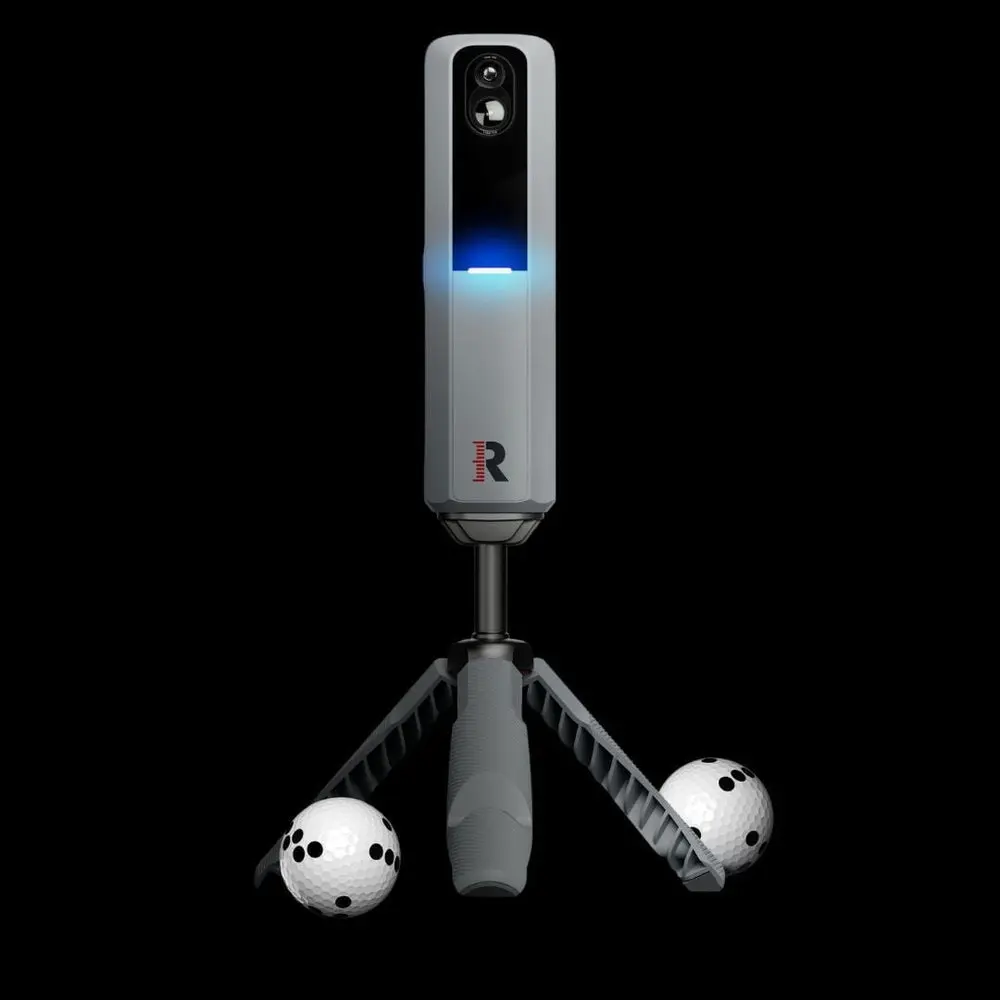
A launch monitor is a sensor that reads the ball, and often the club, around impact and turns it into numbers. Choosing one comes down to four things: how it senses the shot, how much room you have, which numbers you will actually use and how its software is sold. This guide walks through each, using units from our shortlist as examples.
Key insights
- Rapsodo MLM2PRO: Dual optical cameras with radar processing
Radar or camera: how each one sees the shot
Radar launch monitors rely on the Doppler effect. They send out a signal and read how it changes as the ball and club move away, so they sit behind the ball and do their best work outdoors, where they can follow a long stretch of flight. The Swing Caddie SC300i, Garmin Approach R10 and Full Swing KIT are all radar units.
Camera, or photometric, units take rapid images around impact and work out launch and spin from those frames. Because they do not need to watch the ball fly, they suit indoor bays where the net is close. They generally want steady lighting and a consistent hitting spot. The Uneekor EYE MINI uses dual high-speed cameras, while the Rapsodo MLM2PRO and SkyTrak+ combine cameras with radar.
How much room you need
Space is the constraint that rules out the most options. A radar unit needs depth behind the hitting spot: Garmin asks for 6 to 8 feet behind the tee for the R10, and Voice Caddie asks for about 5 feet for the SC300i. Add your stance, a safe swing arc and the distance to the net, and a shallow room fills up fast.
Camera units that sit beside the ball free up that depth, which is why they are common in garage and basement simulators. Ceiling height matters for every type, since you need to swing a driver without touching anything. Measure before you shop, not after.
The numbers that matter
Ball data covers ball speed, launch angle, spin and carry. That is enough to build a yardage chart for every club, the first job most golfers give a launch monitor. Club data covers club speed, path, face angle and attack angle, and it explains why shots curve or fly low.
If a unit lists no spin, as with the SC300i, it can map distances but cannot show why a drive balloons. If you want swing feedback rather than yardages, make club path and face angle a requirement on your list.
Where to start
| Role | Model | Price | Why | Buy |
|---|---|---|---|---|
| Best for swing replays | Rapsodo MLM2PRO | $699.99 | Dual cameras and radar with a year of Premium included, a strong start for a home net. | Check price |
| Uneekor EYE MINI | $3,825 | Dual high-speed cameras and Club Optix club tracking in a floor unit you can carry to the range. | Check price | |
| FlightScope MEVO Gen2 | $1,199 | FlightScope's Doppler radar unit tracks 15 full swing and chipping parameters plus 3 for putting. | Check price |
Subscriptions and software
The hardware is only half the purchase. Many launch monitors include a trial or a first year of premium features and then ask for a renewal: Garmin includes a Garmin Golf trial with the R10, and Rapsodo bundles a year of Premium membership with the MLM2PRO. Others, like the SC300i, need no app at all.
Simulator software is a separate question. Check which platform the courses run on, since several packages are iOS only, and whether course play is in the base purchase or a separate plan. Write down the yearly cost of what you will use before comparing units.
Range, home or both
If you mostly practice at a range, prioritize portability, battery life and a screen you can read in daylight. If you practice at home, prioritize room fit and software. Golfers who want both usually end up with a portable radar unit that also connects to simulator software, which is the role the R10 and the Full Swing KIT play on our list.
Think about who else will use it as well. A family that wants simulator rounds together needs software and a big display more than raw club data, while a single golfer working through a swing change needs the reverse.
FAQ
Is a radar or camera launch monitor better indoors?
Camera units generally have the edge in tight rooms because they read the ball at impact instead of following its flight. Radar units can work indoors if you give them enough depth behind the ball, and blended units such as the MLM2PRO and SkyTrak+ aim to combine the strengths of both.
Do I need a hitting mat and net as well?
For home use, yes. A net or impact screen stops the ball, and a good mat protects your joints and gives the sensor a consistent hitting spot. Plan for both alongside the launch monitor itself, plus a projector if you want a full simulator picture on the wall.
What is smash factor?
Smash factor is ball speed divided by club speed. It measures how efficiently you transfer energy at impact, so a higher figure usually means a more centered strike. It is one of the quickest numbers to improve with practice, and the R10, SC300i and Full Swing KIT all report it.
Can a launch monitor replace lessons?
It can make lessons more productive, but it does not tell you how to fix a fault. A coach turns face and path numbers into a change in grip or swing. Many golfers get the most from both: lessons for the fix and the monitor for regular practice in between.